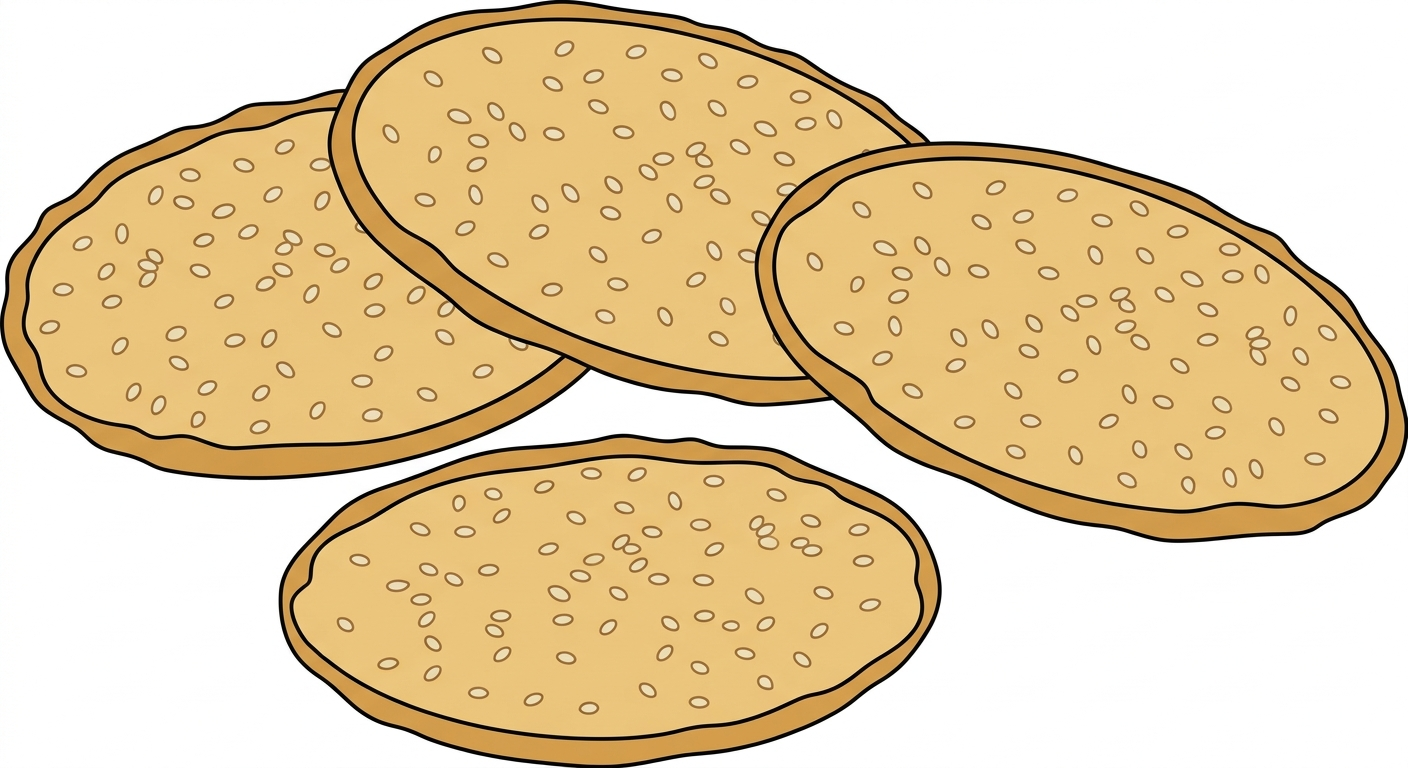
Benne wafers are thin, lacy cookies made from toasted sesame seeds, butter, sugar, and a small amount of flour, dropped by the spoonful onto a baking sheet and baked until they spread into fragile, caramel-edged rounds. They are delicate enough to shatter at slight pressure, sweet with a roasted nuttiness from the sesame, and faintly bitter in the way that caramelized sugar sometimes is at the edges. They are not a sophisticated pastry in any formal sense — the ingredient list is short and the technique is straightforward — but they carry more history per bite than almost anything else in the American South.
Benne is the Wolof word for sesame, and the seed’s presence in South Carolina is a direct consequence of the transatlantic slave trade. Enslaved Africans brought sesame seeds with them from West Africa, carried as provisions on the Middle Passage and planted in kitchen gardens upon arrival. In West African culinary tradition sesame was used across a wide range of preparations — savory and sweet — and that knowledge was preserved and passed forward by the Gullah Geechee people, the descendants of enslaved Africans on the Sea Islands and coastal lowcountry of South Carolina and Georgia. The benne wafer as a Charleston street food and household staple is one of the most direct surviving expressions of that continuity.
Charleston has sold benne wafers commercially since at least the 18th century, and they remain a fixture of the city’s food identity — available in tins at gift shops, made fresh at bakeries, and reproduced in home kitchens from recipes passed down through families. The Old Charleston Cookie Company and similar producers have kept the wafer in commercial circulation, but the most meaningful versions are still the ones made at home, from a recipe written in someone’s handwriting in a notebook that has seen better days.
The sesame seed also carried spiritual significance in some West African traditions, believed to bring luck and ward off misfortune. That association persisted in Gullah Geechee culture, and benne seeds planted near a home’s entrance were thought to offer protection. The wafer, then, is a candy and a cultural artifact simultaneously — a thin, crisp record of people who were brought somewhere against their will and found ways to keep their knowledge alive anyway.
This content was created with the assistance of AI. Sources are currently being reviewed.