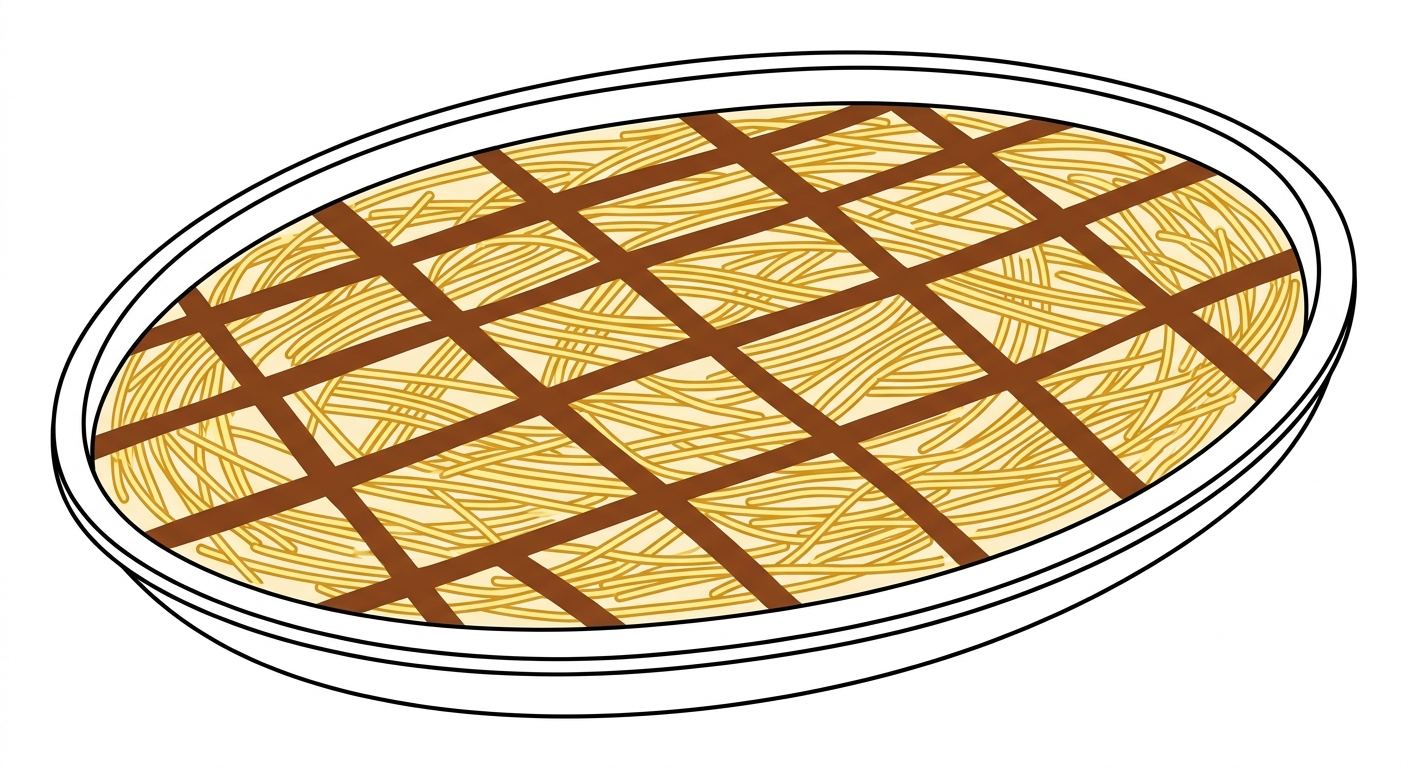
Aletria is a Portuguese dessert made from fine vermicelli pasta — sometimes called angel hair — cooked in sweetened milk with butter, lemon peel, and a cinnamon stick until the noodles absorb the liquid and the mixture thickens. Egg yolks are stirred in off the heat, lending richness and a custardy consistency. The result is poured into a dish and finished with ground cinnamon drawn in a crosshatch or decorative pattern across the surface. Texture varies by region: in the Beiras it sets firm enough to be sliced; in the Minho it stays loose and creamy. Both are correct. The dessert is structurally similar to arroz doce — sweet rice pudding — with vermicelli replacing rice, and the two often appear together on the same Christmas table.
The word aletria comes from the Arabic al-itriya, meaning noodle, and the ingredient itself arrived in the Iberian Peninsula with the Moors during the eighth or ninth century. Vermicelli of this kind — very fine, thread-like dried pasta — appears in medieval Catalan manuscripts including the fourteenth-century Llibre de Sent Soví, which contains recipes using it in both sweet and savory preparations. The pasta was taken up across the peninsula but the name aletria survived into modern use primarily in Portugal; in Spain it largely disappeared except in the region of historic Murcia. During the fifteenth and sixteenth centuries, Portuguese trade routes brought cinnamon and other spices into wider use, and the spice became the dessert’s defining aromatic. Convent baking traditions, which made heavy use of eggs and sugar, further shaped the recipe into its current custardy form.
Aletria is made almost exclusively at Christmas in most Portuguese households, appearing on the Consoada table — the Christmas Eve dinner — alongside salt cod and other traditional dishes. It is one of those recipes that exists largely in grandmother’s memory rather than written form: proportions shift by cook, milk quantity changes by preference, and the egg yolk step is sometimes skipped entirely. The cinnamon pattern on top is the one consistent flourish, applied before the dessert sets, and taken seriously.
This content was created with the assistance of AI. Sources are currently being reviewed.