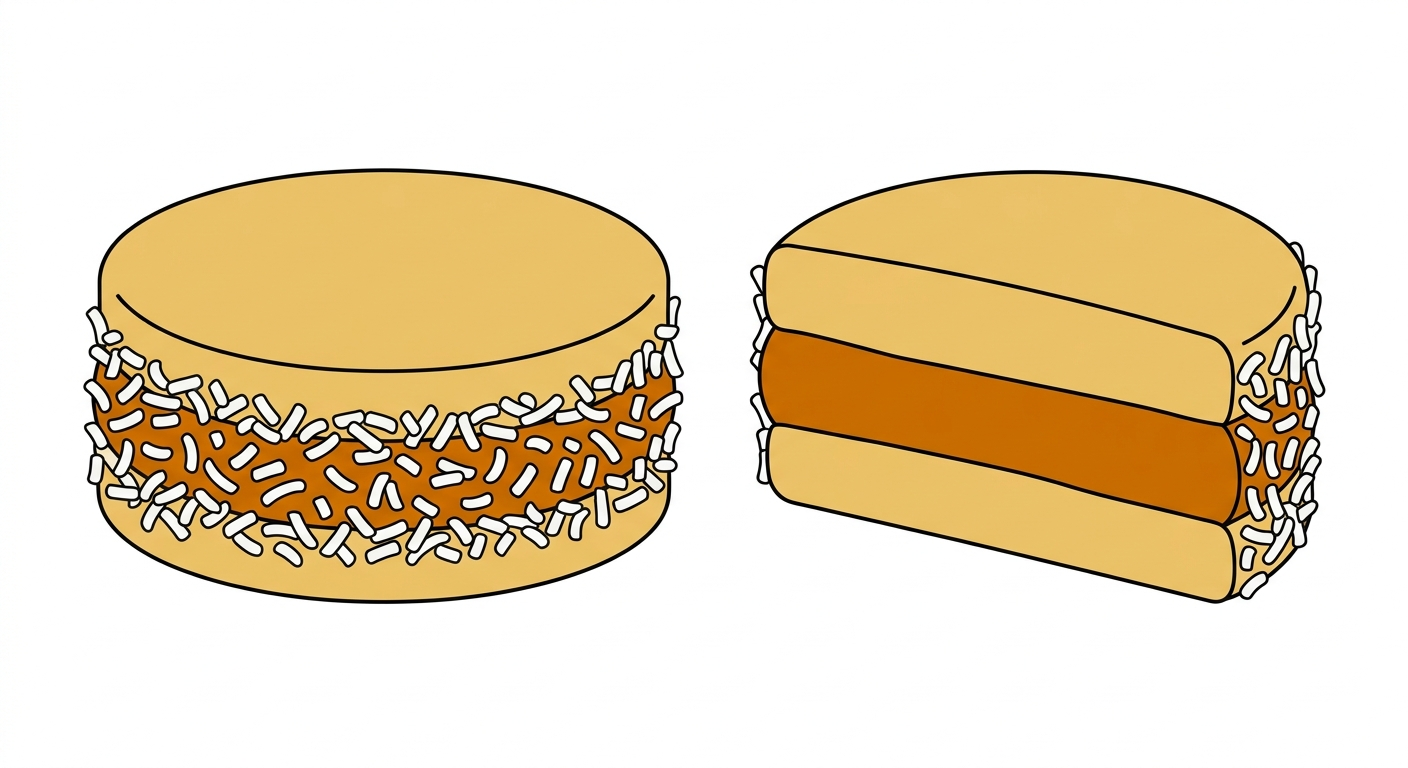
The alfajors name comes from the Arabic al-hasú, meaning filled or stuffed—brought to Spain by the Moors during the Andalusian period and carried to South America by Spanish colonizers in the sixteenth century. The original Spanish alfajor was a honey and nut confection quite different from what Argentina eventually developed. In the mid-nineteenth century, Argentine bakers—most notably the French chemist Augusto Chammas—adapted the format into two round cookies sandwiching a layer of dulce de leche. This sandwich version became so embedded in Argentine daily life that it is now the countrys most consumed packaged sweet by volume.
Argentinas alfajor landscape is defined by regional styles. The alfajor de maicena is a national staple made with cornstarch for a crumbly, tender texture and rolled in shredded coconut. The Mar del Plata style, popularized by premium brands like Havanna, uses wheat-based cookies often coated in dark or white chocolate. In Cordoba, the alfajores are traditionally filled with fruit preserves like quince or pear and finished with a sugary glaze. Each regional variation has its fierce defenders.
Havanna alfajores from Mar del Plata have become an international export—sold in Argentine diaspora stores globally and carried back in luggage from Buenos Aires as the default edible souvenir. The brands airport stores are among the highest-volume retail locations in the country, establishing the alfajors role as a primary national food symbol.
Alfajores exist across Latin America—Peru, Chile, Uruguay, and Bolivia all have distinct versions—but the Argentine sandwich is the internationally recognized standard. It is eaten at breakfast, with coffee, as a midday snack, and as dessert. There is no wrong time in Argentina to eat an alfajor, and Argentines will tell you this directly if asked.
This content was created with the assistance of AI. Sources are currently being reviewed.