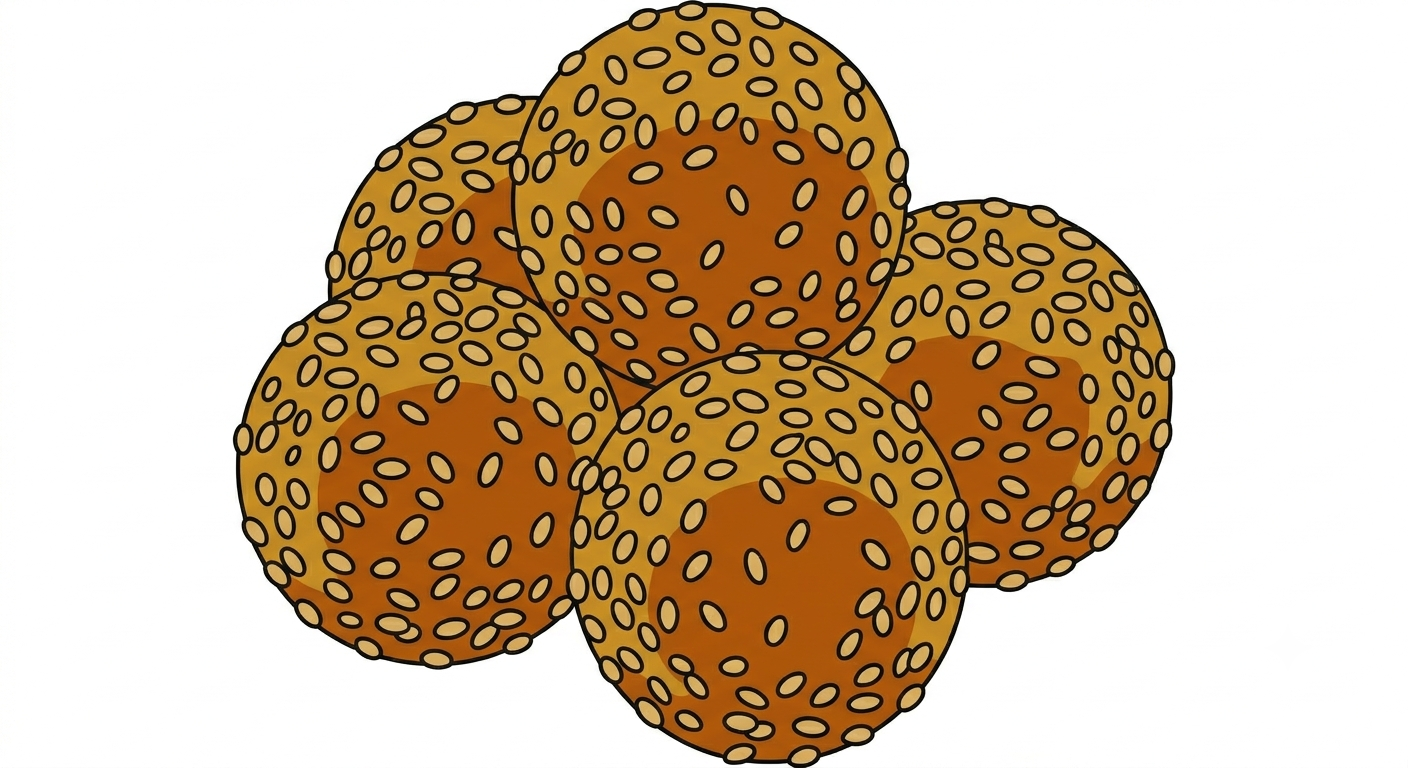
Benne balls in Trinidad are small, golden rounds of toasted sesame seeds bound together with sugar syrup or brown sugar, pressed into tight spheres and left to harden into a chewy, nutty candy. They are sold by street vendors, at markets, and in small shops throughout the island, wrapped in wax paper or piled loose in glass jars. The flavor is straightforward and satisfying — toasted sesame, caramelized sugar, a faint molasses warmth from brown sugar when it’s used — and the texture sits somewhere between a brittle and a soft candy depending on how far the sugar is cooked. They are snack food in the most honest sense: inexpensive, portable, and deeply familiar to anyone who grew up in Trinidad.
The sesame seed arrived in Trinidad through a different route than it did in the American South. Following the abolition of slavery in the British Caribbean in 1834, plantation owners faced a severe labor shortage and turned to a system of indentured labor, recruiting workers primarily from India under contracts that were exploitative in their own right. Between 1845 and 1917, over 140,000 Indians came to Trinidad under indenture, bringing with them the foodways, spices, and culinary traditions of their home regions. Sesame — til in Hindi — was deeply embedded in Indian cooking and confectionery, used in sweets, savory preparations, and religious offerings, and it traveled with the people who knew how to use it.
The benne ball as a Trinidadian street candy is the product of that transplanted tradition taking root in a new landscape. It belongs to a broader category of Trinidadian sesame sweets that includes simsim — a flatter sesame brittle — and reflects the way Indian culinary influence has shaped Trinidadian food culture at every level, from street snacks to home cooking to the rhythms of daily life.
Trinidad’s food culture is one of the most genuinely syncretic in the Caribbean — African, Indian, Chinese, Syrian, Spanish, and British influences layered over centuries of colonial history — and the benne ball sits within that complexity as a quiet, unassuming example of how a single ingredient can carry an entire migration inside it.
This content was created with the assistance of AI. Sources are currently being reviewed.