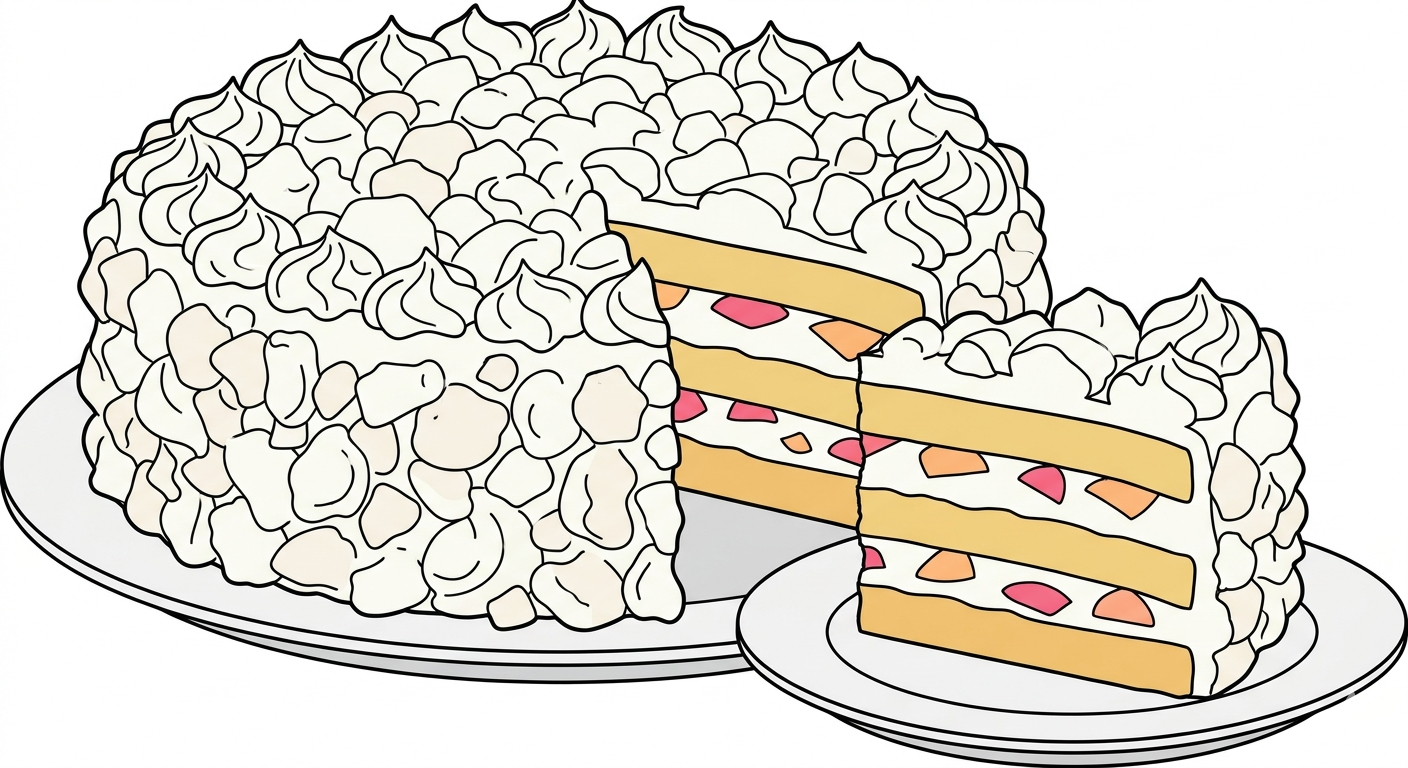
Chajá was created in the 1920s at the Hotel Las Familias in Paysandú, a city in northwestern Uruguay on the Argentine border, by a pastry chef named Orlando Castellano. It is named after the chajá — a large, crested bird native to the wetlands of Uruguay and Argentina, known for its light, buoyant flight. The cake’s structure is meant to reflect that quality: layers of sponge cake, whipped cream, peach slices, and crushed meringue, assembled into a dome that is more air than weight.
The construction is specific. Sponge cake layers are soaked lightly and layered with whipped cream. Peach slices — traditionally canned rather than fresh, which is considered the correct version and not a shortcut — are distributed through the layers. Crushed meringue is folded into the cream and pressed onto the exterior, giving the finished cake its characteristic rough white surface. The meringue softens slightly against the cream over time, producing a texture that is neither fully crisp nor fully soft.
Chajá became Uruguay’s most recognized original dessert — specific enough to be distinctly Uruguayan, accessible enough to appear at birthday celebrations, family gatherings, and restaurant menus across the country. Paysandú claims it with particular pride and the city’s connection to the cake is part of its local identity.
The canned peach question is settled in Uruguay in the same way the unpitted cherry question is settled for clafoutis in Limousin — the traditional ingredient is correct, the substitution is acceptable elsewhere, and Uruguayans who grew up eating chajá made with canned peaches are not interested in fresh peach revisions.
This content was created with the assistance of AI. Sources are currently being reviewed.