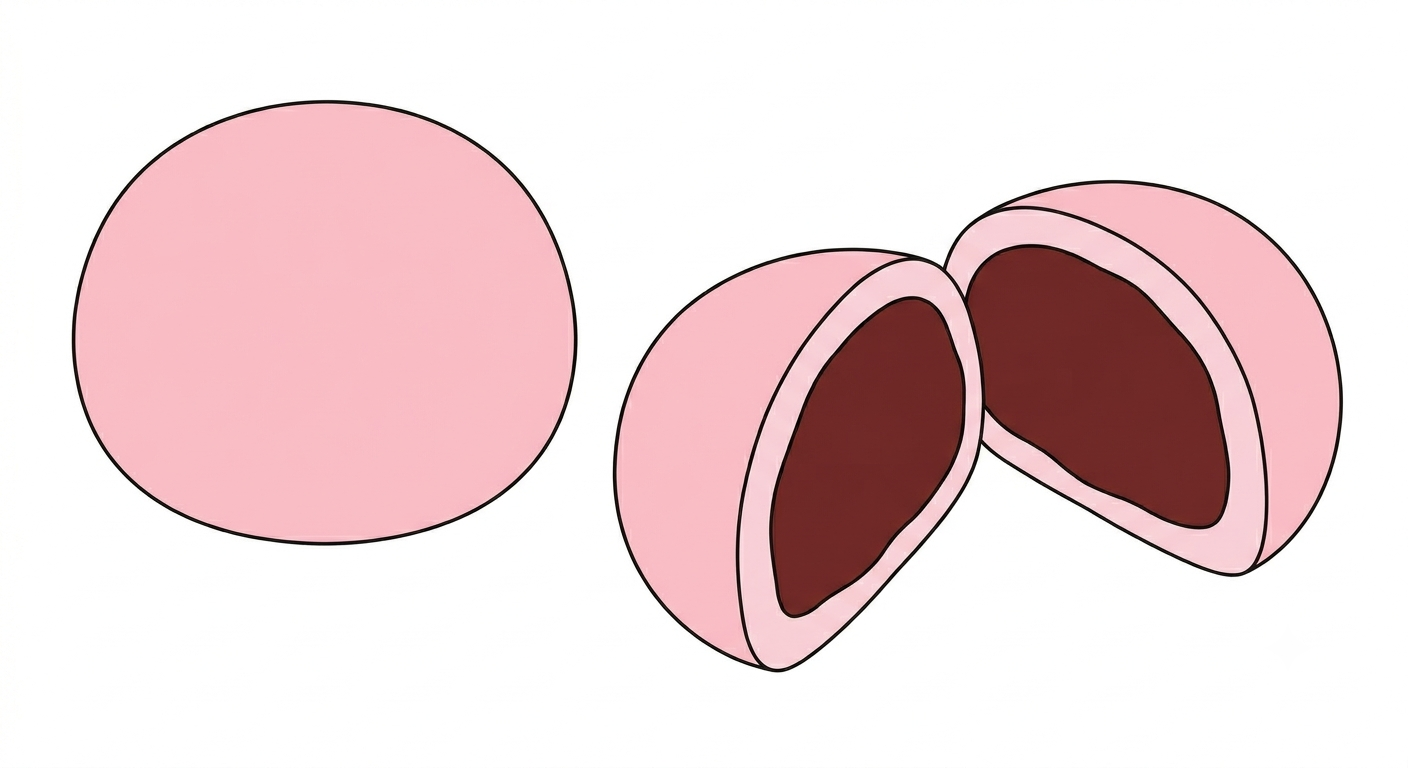
Chapssaltteok is a glutinous rice cake — soft, yielding, with a slight resistance before it gives — filled with sweetened red bean paste and dusted on the outside with a fine powder that keeps it from sticking to everything it touches. The exterior is smooth and pale. The filling is dense and dark. The whole thing fits comfortably in one hand and disappears in two or three bites. It is simple in the way that things are simple when they have been made and refined for a very long time.
The name breaks down exactly: chapssal means glutinous rice, tteok means rice cake. Tteok as a category is one of the foundational foods of Korean culinary history. Its origins trace back to the Three Kingdoms period, roughly 57 BCE to 668 CE, when rice became a staple food on the Korean Peninsula and rice-based preparations began to diversify. For most of that history tteok was ceremonial — made for births, weddings, funerals, harvest festivals, and Lunar New Year, considered a rare and valuable food reserved for special occasions and the royal court. The glutinous rice variety, chapssaltteok, carried particular significance because of its texture: sticky, cohesive, difficult to separate. That quality made it a symbol of good fortune and unity, and it made it the obvious choice for one of its most enduring modern associations.
Chapssaltteok is traditionally given as a good luck gift to students before university entrance exams. The sticky texture is meant to symbolize knowledge sticking in the test-taker’s mind. This is the kind of food symbolism that only works when the food itself is already understood to be meaningful — when the texture carries enough cultural weight that a gift of rice cake before an exam reads as genuinely supportive rather than odd. In Korea, it does.
The relationship between chapssaltteok and Japanese mochi is real and worth naming directly. The filled, round form that chapssaltteok takes today — glutinous rice dough wrapped around sweetened red bean paste — closely resembles Japanese daifuku, and the resemblance is not coincidental. Koreans themselves used to call this style of rice cake “mochi,” the Japanese word, before the term chapssaltteok became the standard name. The Japanese colonial period brought significant cultural exchange — imposed and otherwise — and the filled rice cake form appears to be part of what moved between the two food traditions during that time. This sits alongside the deeper tteok history rather than replacing it: the technique and the ingredient are ancient Korean; the specific filled form as it exists today carries the mark of that contact.
What has happened since is unambiguously Korean. Chapssaltteok appears in red bean, sesame, and green tea variations. It is sold in traditional tteok shops, convenience stores, and upscale patisseries. It is eaten year-round, given as gifts, and made at home. The good luck association with exams has embedded it into one of the most high-stakes annual rituals in Korean life. A food that began as a court delicacy made from pounded glutinous rice has become, over a very long arc, something much more ordinary and much more necessary — which is usually how the best foods end up.
This content was created with the assistance of AI. Sources are currently being reviewed.