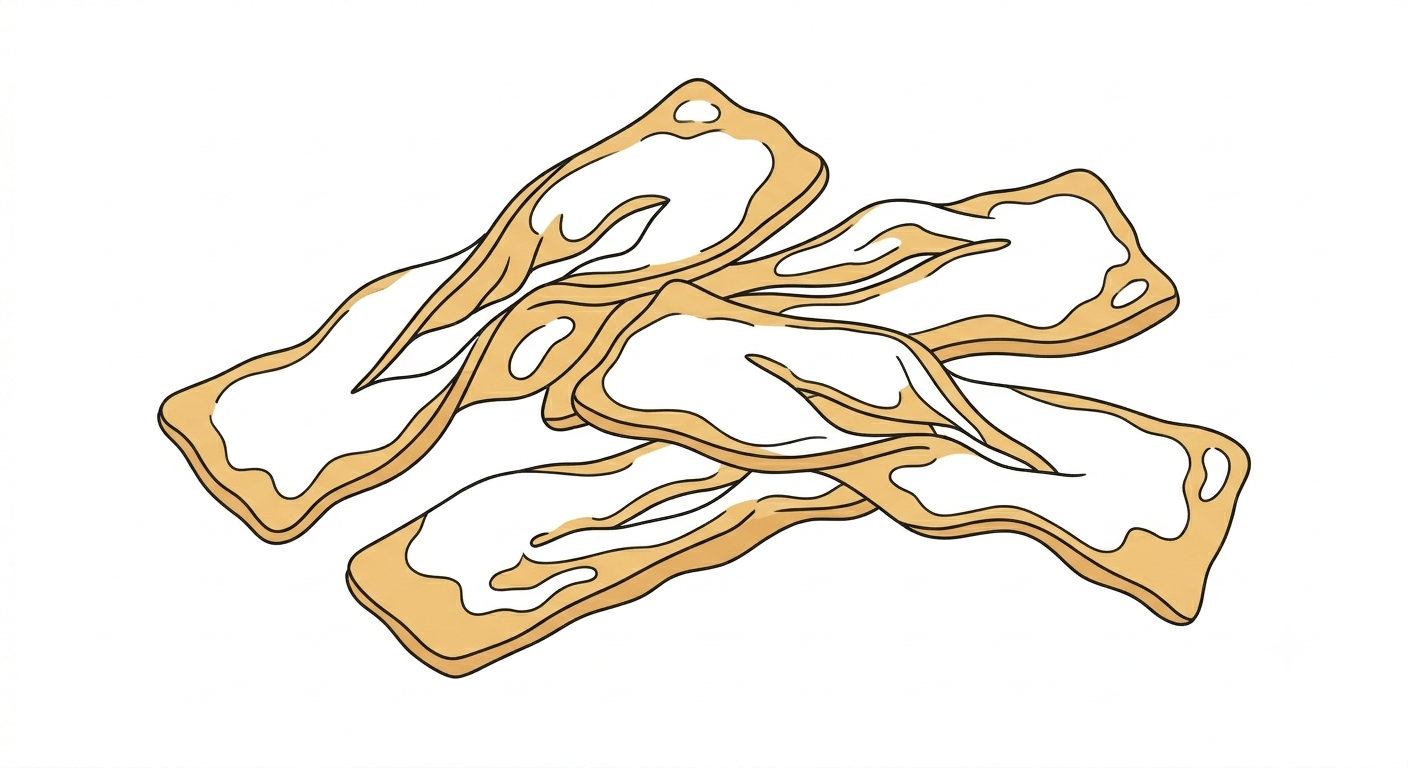
Chiacchiere are thin, crisp Italian fried pastries made from a simple dough of flour, eggs, butter, sugar, and a splash of grappa or white wine, rolled to near-translucency, cut into irregular rectangles or strips with a fluted pastry wheel, and dropped into hot oil until they puff and blister and turn the color of pale straw. They emerge light and shatteringly crisp, dusted immediately with a snowfall of powdered sugar, and eaten while still warm. The name means “chatter” or “gossip” in Italian, which is either a reference to the sound they make when you bite into them or to the festive, social context in which they are traditionally eaten — both explanations are plausible and neither is confirmed.
Chiacchiere are Carnival food — specifically the fried sweets that appear across Italy in the weeks between Epiphany and Ash Wednesday, when the calendar calls for indulgence before the austerity of Lent. They are known by different names in different regions: bugie in Liguria and Piedmont, frappe in Rome and Lazio, cenci in Tuscany, galani in Venice, crostoli in the northeast. The names change but the pastry is essentially the same — thin fried dough, powdered sugar, eaten in quantity at a time of year when excess is the point. The regional name variations are taken seriously by the people who use them, and suggesting to a Roman that their frappe and a Milanese chiacchiera are the same thing is an argument you will not win quickly.
The tradition of fried sweets at Carnival is ancient, predating Christianity and connecting to the Roman festival of Saturnalia, when social hierarchies were temporarily inverted and indulgence was not just permitted but expected. The Church absorbed and reframed the pre-Lenten feast rather than eliminating it, and the association between fried dough and the days before Ash Wednesday has persisted across two thousand years of continuous baking. Chiacchiere, in their current form, are a medieval and early modern refinement of that ancient impulse — the dough enriched with eggs and fat, the frying more controlled, the powdered sugar a later addition once sugar became affordable enough to use freely.
The alcohol in the dough is not incidental. Grappa, white wine, or sometimes Marsala serves a functional purpose — the alcohol evaporates rapidly in the hot oil, creating steam that causes the pastry to puff and blister and stay crisp rather than absorbing oil and becoming greasy. It is a small piece of food science embedded in a very old recipe, and it is the reason chiacchiere stay light even after frying.
This content was created with the assistance of AI. Sources are currently being reviewed.