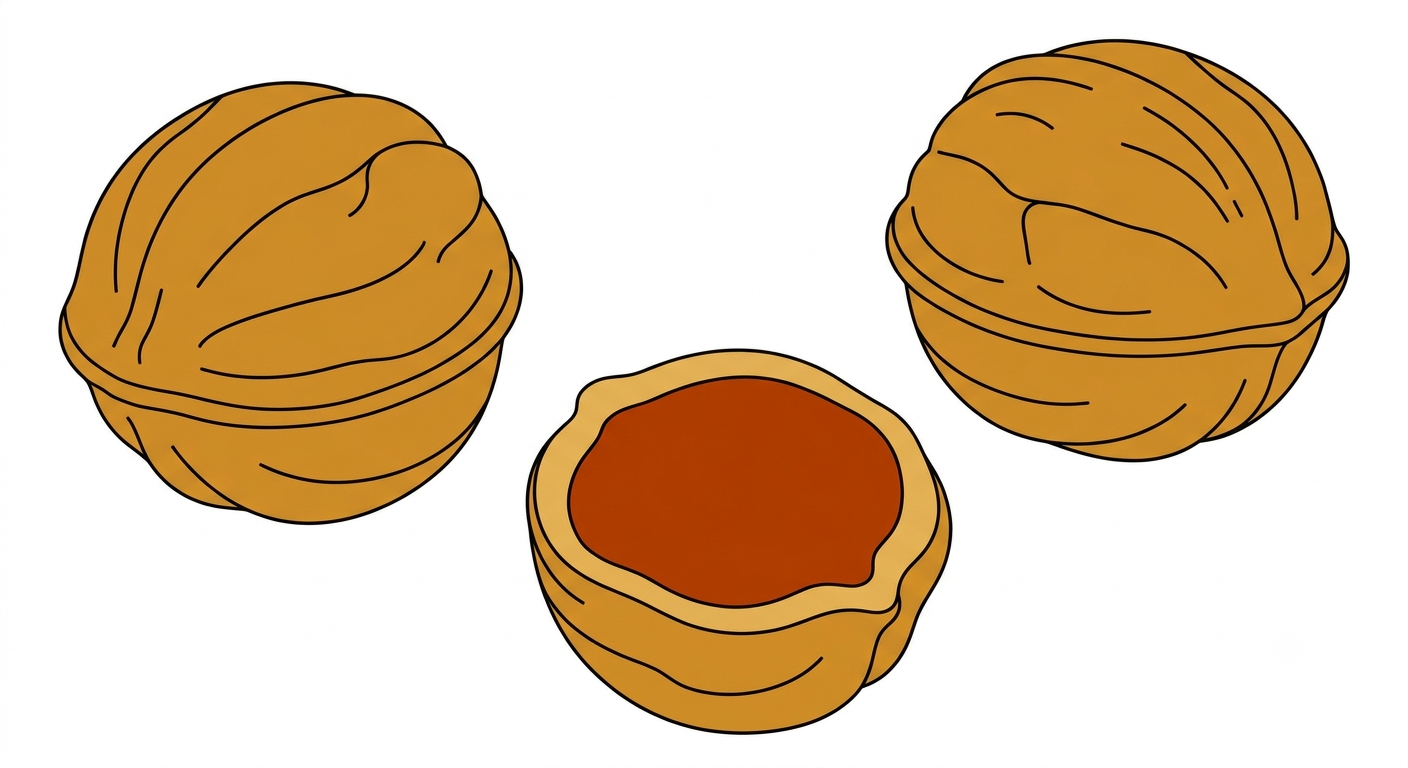
Hodu-gwaja are small, walnut-shaped baked cakes — a thin, golden shell made from walnut flour and wheat flour, pressed in a cast-iron mold, filled with a mixture of red bean paste and chopped walnut pieces. They are bite-sized, warm when freshly made, and have a particular quality that comes from the walnut being present in both the shell and the filling — a nuttiness that runs all the way through rather than sitting only in the center. They are sold at street stalls, train stations, and highway rest stops, usually in small paper bags, and eaten immediately. The smell of them cooking — butter and walnut and sugar hitting a hot iron — is the smell of Korean transit stops in winter.
The origin of hodu-gwaja is unusually precise for a street food. It was created in 1934 by a married couple, Jo Gwigeum and Sim Boksun, who opened a small bakery in Cheonan, a city roughly 53 miles south of Seoul, just ten meters from the train station. Jo had spent time learning baking techniques in Japan before returning to Korea and applying what he had learned to local ingredients. The mold he used — a cast-iron press with shaped cells that gives the cookie its walnut form — was directly inspired by Japanese filled pastry traditions, particularly the technique used for taiyaki, the fish-shaped red bean cakes that were already well established in Japan. What Jo and Sim did was take that method and rebuild it around Cheonan’s defining local product: the walnut.
Cheonan had been walnut country for a long time. The nut itself was not originally Korean — walnuts arrived on the peninsula via Arab and Chinese traders, reportedly as far back as the Silla Kingdom over a thousand years ago, and were for much of that history expensive enough to be reserved for royalty. By the time Jo Gwigeum was building his recipe in the 1930s, Cheonan’s walnut orchards had been cultivated for generations and the nut was the region’s most recognizable agricultural product. Using it as both a structural ingredient in the dough and as a filling was an act of local identity as much as culinary logic.
The shop stayed local for decades. Hodu-gwaja was Cheonan’s thing — known to people who lived there or passed through on the train, purchased as a small gift to bring back home, but not widely distributed beyond that geography. That changed in the 1970s, when the expansion of Korea’s expressway system and the culture of highway rest stop food turned hodu-gwaja into a national snack. The walnut cake that had lived for forty years in a single city near a train station suddenly had access to every major road in the country, and it traveled all of them.
Today hodu-gwaja is sold everywhere in Korea — packaged in boxes at convenience stores, made fresh at street stalls, available in variations with cream cheese, custard, or chocolate fillings alongside the original red bean. The original red bean version remains the standard. The shape has never changed. It still looks exactly like a walnut, which is either charming or obvious depending on your perspective, and either way it works — the form communicates the ingredient before you’ve tasted anything, which is a useful quality in a street food you’re buying from a moving train.
This content was created with the assistance of AI. Sources are currently being reviewed.