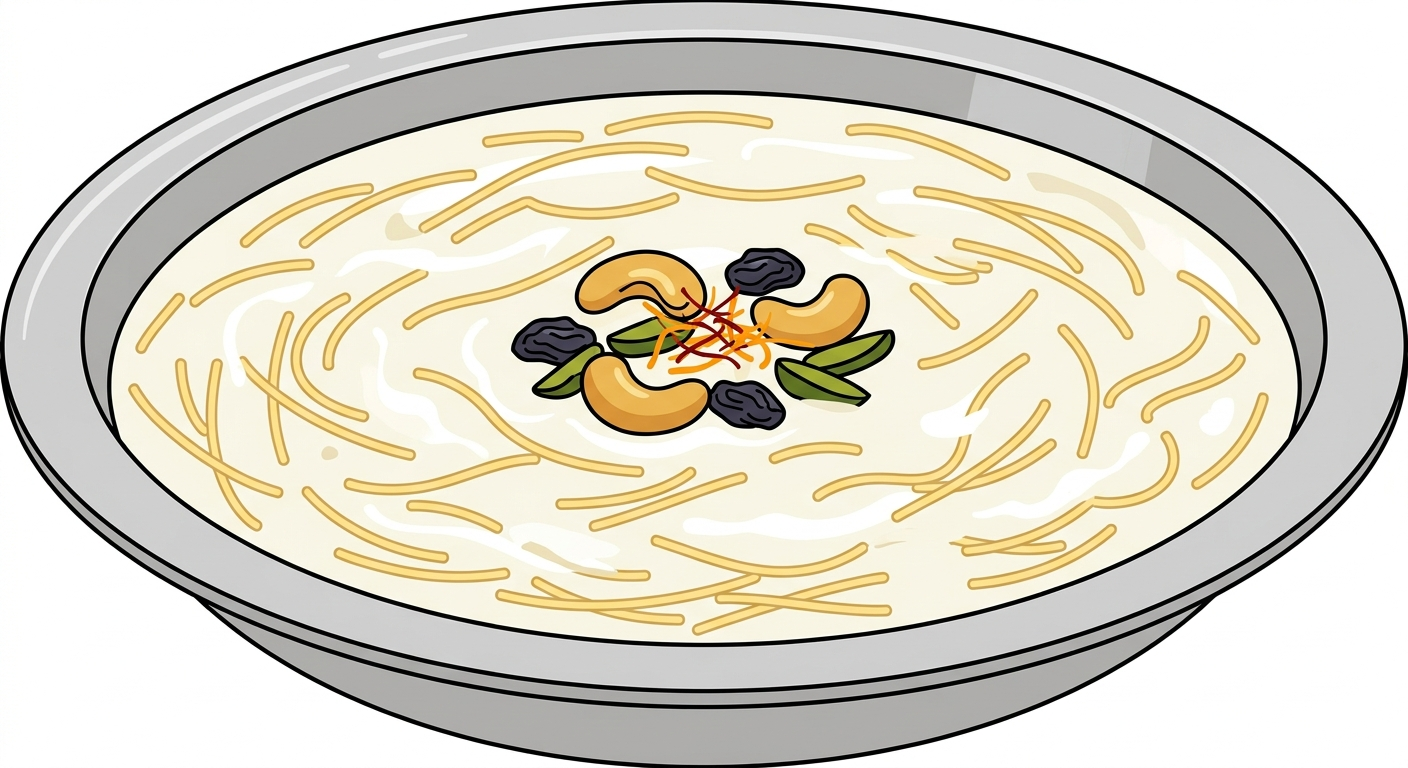
Kheer is rice cooked slowly in full-fat milk until the milk reduces and thickens around the grain, sweetened with sugar or jaggery, and flavored with cardamom, saffron, and a handful of pistachios, almonds, or raisins. The rice breaks down gradually as it cooks, releasing starch into the milk and thickening it from within. The result is neither soup nor pudding in the Western sense but something between the two — liquid enough to pour, substantial enough to satisfy, warm in winter and chilled in summer. It is served in small clay cups or silver bowls, garnished with a pinch of saffron threads and crushed nuts, and eaten at every occasion that matters in Indian life — weddings, festivals, births, temple visits, the completion of anything worth celebrating.
The name comes from the Sanskrit kshirika, meaning a dish prepared with milk, which reflects both the primary ingredient and the antiquity of the preparation. The earliest documented references appear in the Ramayana and the Mahabharata, the great Sanskrit epics, where payasam — the South Indian name for the same dish — is mentioned as a sacred offering. This places the dessert’s documented history at over two thousand years, and the actual practice is almost certainly older, rooted in the agricultural and ritual life of the subcontinent long before it was written down.
The most specific origin story places kheer at the Jagannath Temple in Puri, Odisha, where it has been prepared as mahaprasad — sacred food offered to the deity and then distributed to worshippers — for approximately two thousand years without interruption. The temple kitchen at Puri is one of the largest in the world, cooking for thousands of pilgrims daily, and kheer remains central to what it produces. The tradition of preparing payasam as temple prasad extends throughout South India as well, present at every major Hindu temple from Kerala to Tamil Nadu, where the dish is made with jaggery rather than sugar and sometimes with coconut milk alongside cow’s milk. Each regional version is understood as the same dish and as something entirely specific to its place.
The word kheer is used primarily in North India, while payasam belongs to the South and payesh to Bengal. The differences in naming reflect differences in preparation — North Indian kheer is flavored with cardamom and saffron, South Indian payasam frequently uses jaggery and sometimes tapioca or vermicelli instead of rice, Bengali payesh is made with fragrant gobindobhog rice and thickened to a dense, almost solid consistency. All of these are kheer. The argument about which version is correct is the argument that every family in every region of the subcontinent has been having for centuries, and no one has won it yet.
Kheer is also the dessert most associated with auspicious occasions in Hindu tradition. It is made on birthdays, on the first day of a new venture, on Diwali, on Holi, on the day a child takes their first solid food. The legend attached to it at Ambalapuzha temple in Kerala — where the deity Krishna, disguised as a sage, won a chess match against a king and asked for rice grains doubled on every square of the board, then revealed that the unpayable debt would be settled by serving payasam free to every pilgrim who came to the temple — has been honored continuously at that temple ever since. A dessert with a two-thousand-year institutional presence and a mythology involving Krishna and a chess match has earned its place on every important table in India.
This content was created with the assistance of AI. Sources are currently being reviewed.