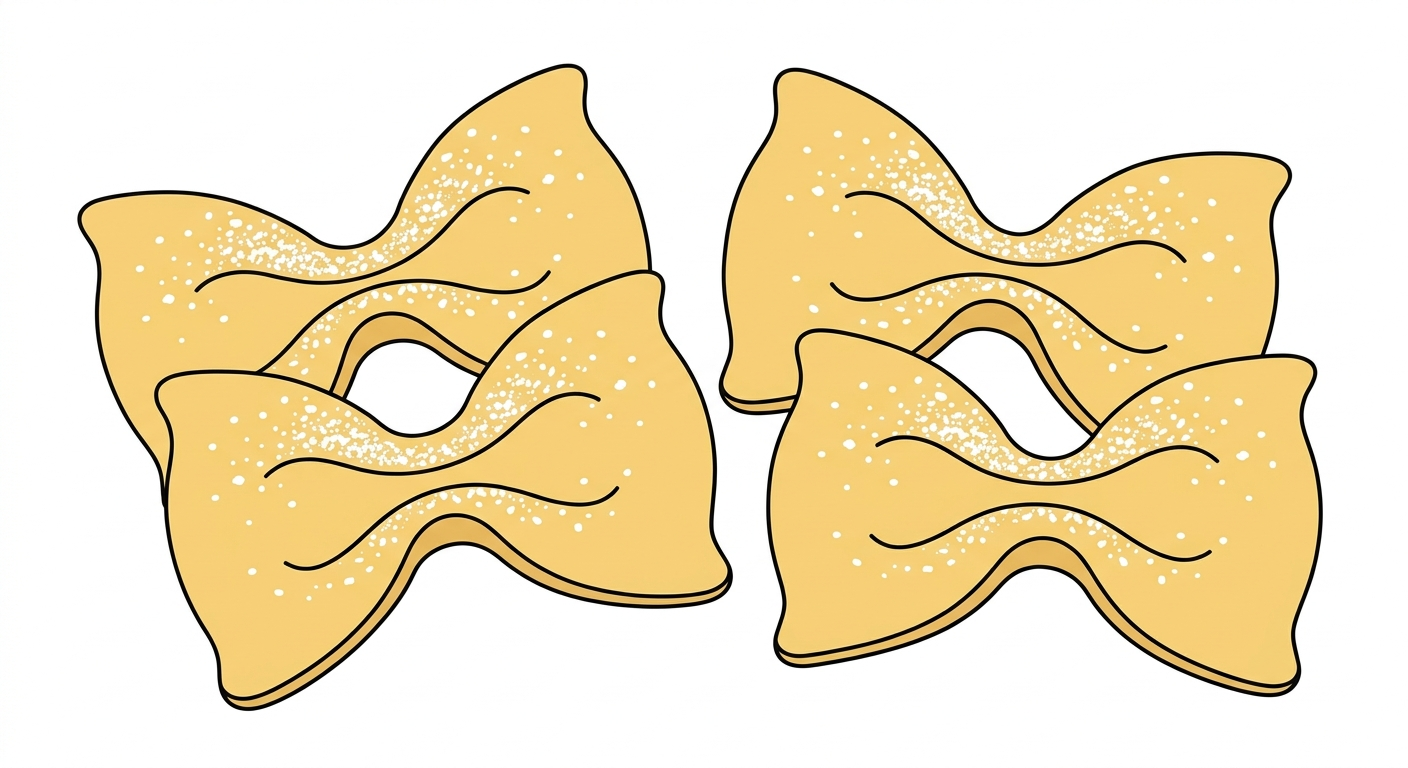
Kichel is made from four ingredients: eggs, flour, oil, and sugar. The dough is rolled out as thin as possible — nearly translucent — cut into rectangles, twisted into bow ties, dusted with sugar, and baked until puffed and golden. The result is not quite a cookie and not quite a cracker. It is light, hollow, and brittle, shattering on first bite and dissolving quickly. The sugar coating is the primary sweetness; the dough itself contributes almost nothing but structure and air. Rolling thickness is the entire technical challenge — too thick and the kichel is dense and disappointing; thin enough and it blisters and puffs in the oven into something considerably more interesting than its ingredient list suggests.
Kichel comes from the Yiddish diminutive of kukhn, meaning cake, and originates in Ashkenazi Jewish communities in Poland, Ukraine, and the surrounding region. It is pareve — made with oil rather than butter — which allows it to be served alongside both meat and dairy meals under kosher dietary law, a practical consideration that shaped the recipe directly. The bow tie shape is the most common form, though square and diamond cuts exist by region and by bakery. In some regional dialects it was called “Hosen Blosen” or “Nothings,” names that acknowledge the cookie’s essential weightlessness.
Its social context is specific: kichel was the kiddush cookie, set out on platters at Shabbat morning synagogue gatherings from Eastern Europe through the American Jewish diaspora. It appeared at simchas and shivas with equal frequency, a background presence at every communal table. Jewish immigrant memoirs describe it being sold alongside challah and babka at early twentieth century bakeries, and it remained a fixture of American Jewish bakeries through the mid-twentieth century before becoming harder to find. It is sometimes served alongside herring, a pairing that sounds unlikely and apparently works. The cookie is humble enough that it accommodates almost any context, which is probably why it lasted as long as it did.
This content was created with the assistance of AI. Sources are currently being reviewed.