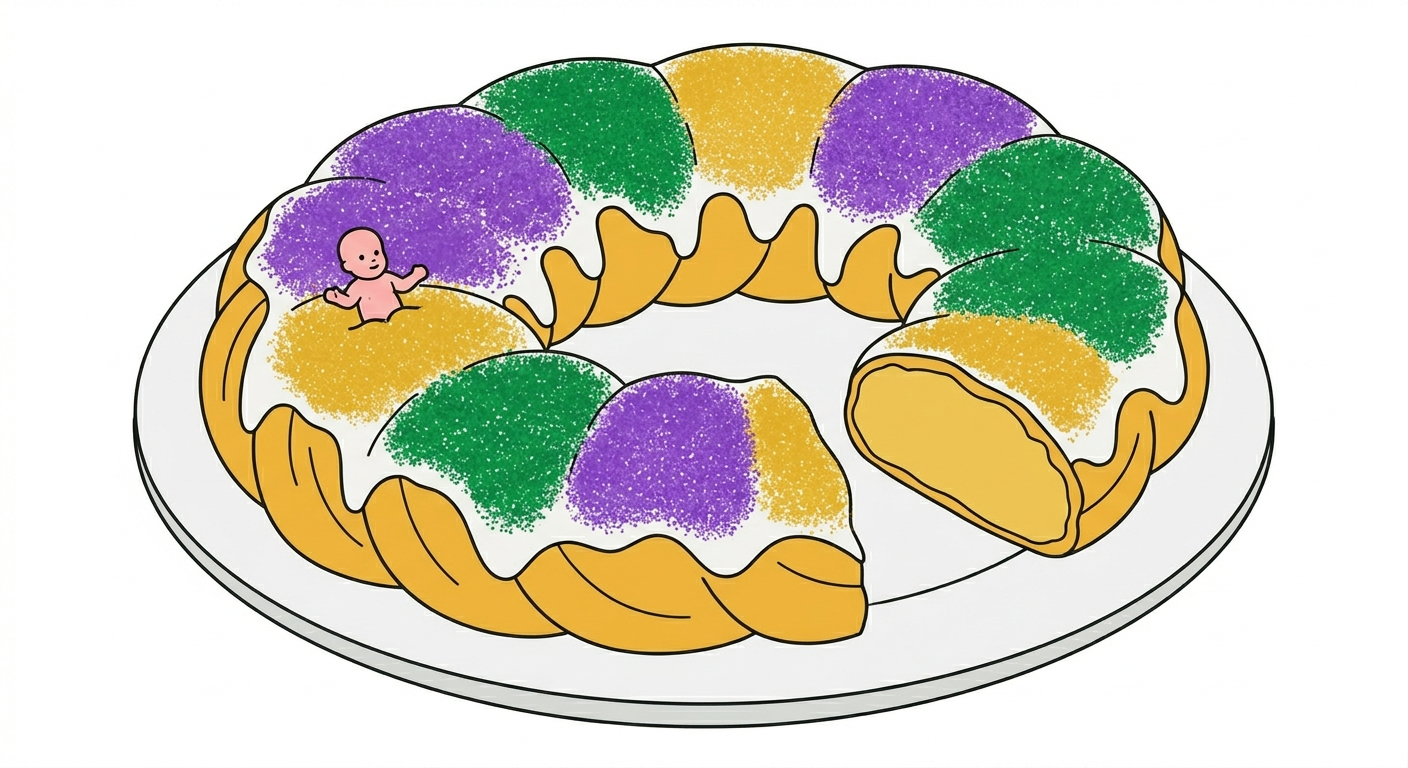
King Cake is a New Orleans institution with a direct lineage to European Epiphany celebration cakes. The French galette des rois and the Spanish rosca de reyes both hide a small token inside a festive cake eaten on January 6th—the Feast of the Epiphany—with the finder declared king for the day. French and Spanish colonial settlers brought both traditions to Louisiana, where they merged and evolved into the specific New Orleans King Cake that exists today.
The New Orleans version is an oval ring of brioche-like enriched dough, iced in white glaze and blanketed in colored sugars—purple for justice, gold for power, and green for faith—the official colors of Mardi Gras selected by the Krewe of Rex in 1872. Traditionally tucked into the dough is a small plastic baby, a modernized version of the bean or coin used in European predecessors. Whoever finds the baby in their slice is crowned “King” for the day and is obligated to provide the next King Cake—a social contract that keeps the cycle going through the entire Carnival season.
King Cake season runs strictly from Epiphany on January 6th through Fat Tuesday. During those weeks, New Orleans bakeries produce them in enormous quantities; they arrive at offices, parties, and school classrooms daily. Outside of that window, the cakes disappear from shelves, maintaining their status as a sacred seasonal ritual.
The filled King Cake is a more recent development. Cream cheese, praline, strawberry, and Bavarian cream fillings began appearing in the latter half of the twentieth century and are now standard offerings. While purists often prefer the simple cinnamon-sugar original, the filled versions now dominate the market.
Today, King Cake is a global ambassador for the city. National shipping from legendary bakeries allows the New Orleans diaspora to participate in the ritual from afar, making the cake a direct and delicious transmission of place.
This content was created with the assistance of AI. Sources are currently being reviewed.