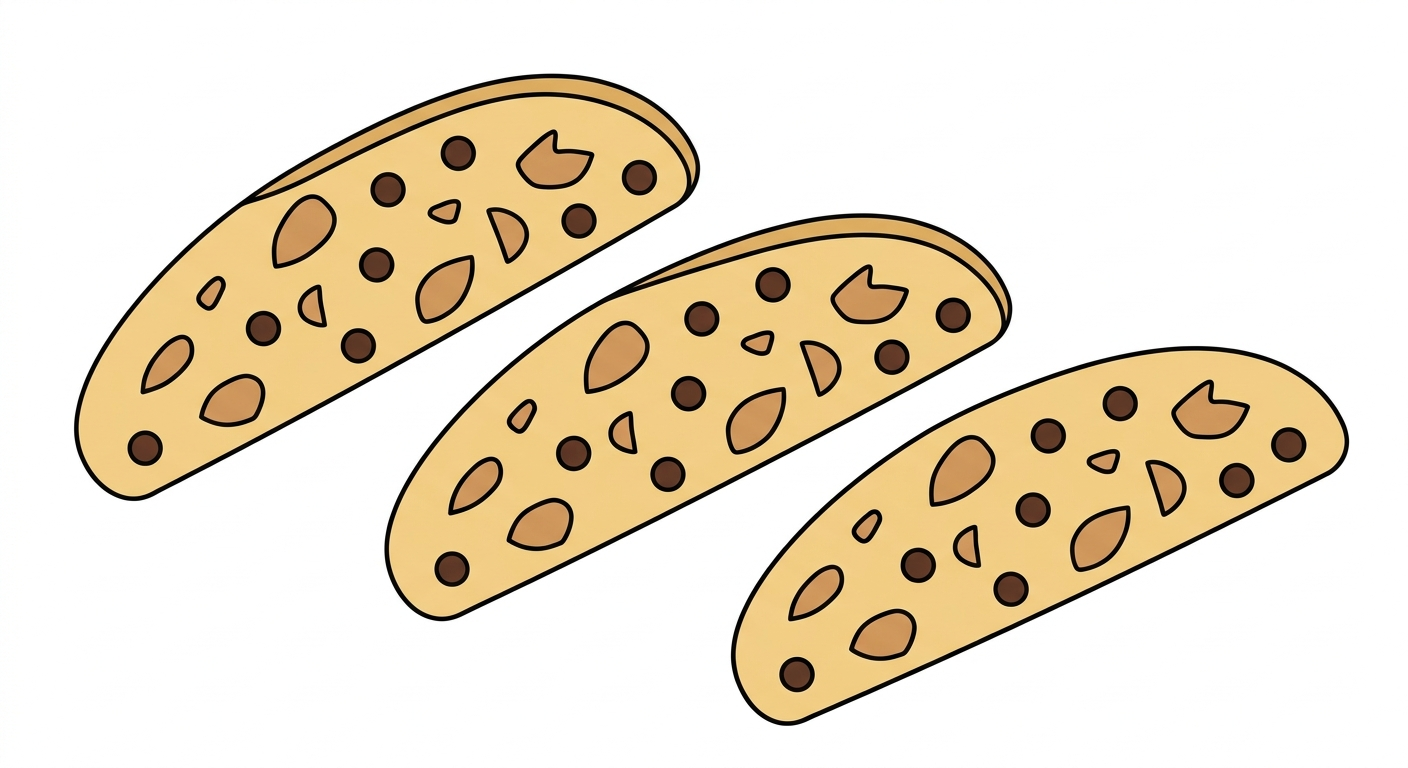
Mandelbrot is a twice-baked Ashkenazi cookie made by shaping dough into a log, baking it once until set, slicing it into pieces, then returning those pieces to the oven to dry out and crisp. The name is Yiddish and German for “almond bread” — mandel being almond, brot being bread — though modern versions frequently contain chocolate chips, walnuts, cinnamon sugar, or dried fruit instead of or alongside almonds. The dough is made with oil rather than butter, which makes it pareve and suitable for serving after a meat meal under kosher dietary law. That distinction is not incidental — it shaped the recipe directly.
The relationship between mandelbrot and Italian biscotti is genuine but unresolved. Both are twice-baked, both are built for shelf life, and both trace the same basic method back to medieval Italian baking. Food historian Gil Marks places mandelbrot’s origin in Germany, traveling eastward through Ashkenazi communities, and notes that Piedmont’s large Jewish population may have been the point of contact where Jews first encountered biscotti and adapted it into their own baking tradition. The connection is plausible but not documented with certainty. What is clear is that by the early nineteenth century mandelbrot was established in Eastern European Jewish kitchens, and by the 1940s it had appeared in enough American Jewish cookbooks to be considered a staple of the diaspora table.
The practical virtues of mandelbrot made it well-suited to itinerant and observant Jewish life. It kept for weeks, traveled without breaking down, required no butter, and could be made ahead of Shabbat without issue. In Ukraine the same cookie goes by kamishbrot — a regional name for the same form. American versions introduced baking powder, which makes the dough lighter and less dense than the Eastern European original, and swapped in shortening or neutral oil. The result is slightly softer and less austere, and chocolate chips have become as common as almonds in American Jewish households. It is often described as Jewish biscotti, which is accurate enough as a shorthand but papers over the fact that the two traditions developed in parallel and the borrowing, if it happened, went in both directions.
This content was created with the assistance of AI. Sources are currently being reviewed.