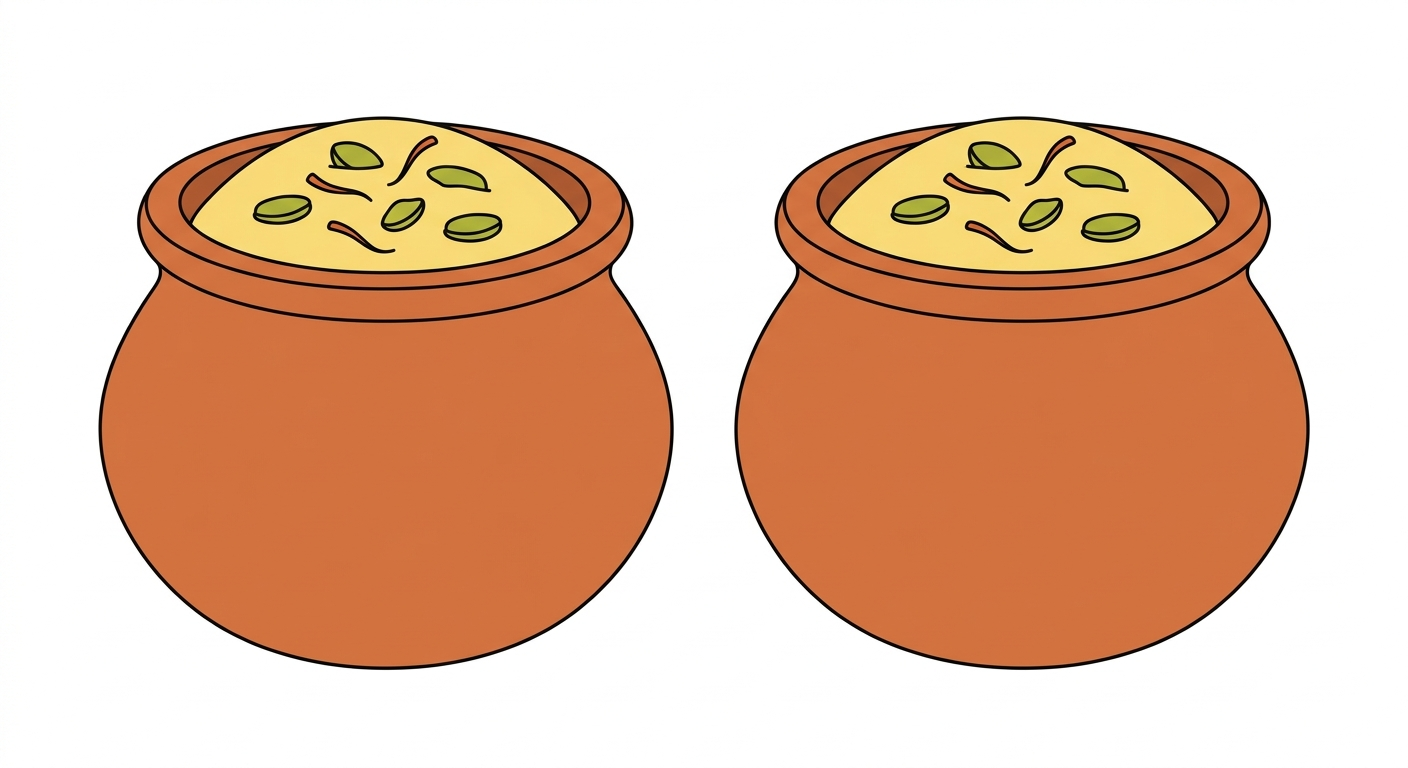
Matka kulfi is kulfi made and served the traditional way — the flavored milk mixture poured into small cone-shaped molds called kulhars, sealed with lids, packed into a large clay pot called a matka filled with ice and salt, and left to freeze slowly without any mechanical refrigeration. The result is denser and creamier than anything a modern freezer produces — the slow freeze prevents the ice crystals that give machine-frozen desserts their lighter texture, producing instead something almost solid, intensely concentrated, and slow to melt. It is kulfi in its original form, the matka being both the freezing vessel and, in the version sold by street vendors, the serving vessel — cracked open at the stall, the frozen kulfi slipped out onto a plate and garnished with cardamom, saffron, or crushed pistachios.
The word kulfi comes from the Persian qulfi, meaning covered cup — a direct reference to the sealed mold in which it freezes. The word is the oldest documentation of the technique’s origin. Kulfi developed in the royal kitchens of the Mughal Empire in 16th-century Delhi, built on the Persian culinary tradition that the Mughals brought with them from Central Asia. The Ain-i-Akbari, the detailed administrative record of Emperor Akbar’s court, mentions the use of saltpeter for refrigeration and the transport of Himalayan ice to warmer regions — the practical infrastructure that made frozen desserts possible in a pre-refrigeration climate. The milk was boiled down to a rich, concentrated base, flavored with saffron, pistachios, cardamom, and rose water, then frozen in sealed molds using that Himalayan ice and salt.
The matka is the piece of technology that made all of this portable. A large clay earthenware pot packed with ice and salt maintains a temperature cold enough to keep the kulfi frozen without any external power source — a system that predates the electric refrigerator by several centuries and that street vendors called kulfiwallahs still use today. The kulfiwallah carries the matka on his head or pushes it on a cart, the sealed molds inside the ice-and-salt slurry, selling individual portions throughout the day. The matka keeps the kulfi frozen until the moment it is served, which in the heat of a Delhi summer is an engineering solution as much as a culinary one.
The flavors have expanded considerably from the original saffron and pistachio. Mango kulfi — made with fresh Alphonso pulp in season — is the most celebrated modern variation. Rose, malai, paan, kesar, and chocolate all exist in wide circulation. The traditional version remains saffron and pistachio, the gold and green running through the pale frozen milk in visible threads and fragments. That version is the one that tastes most directly of the Mughal kitchen — the same ingredients, the same technique, the same clay pot, the same salt and ice doing the work that electricity now handles everywhere else.
This content was created with the assistance of AI. Sources are currently being reviewed.