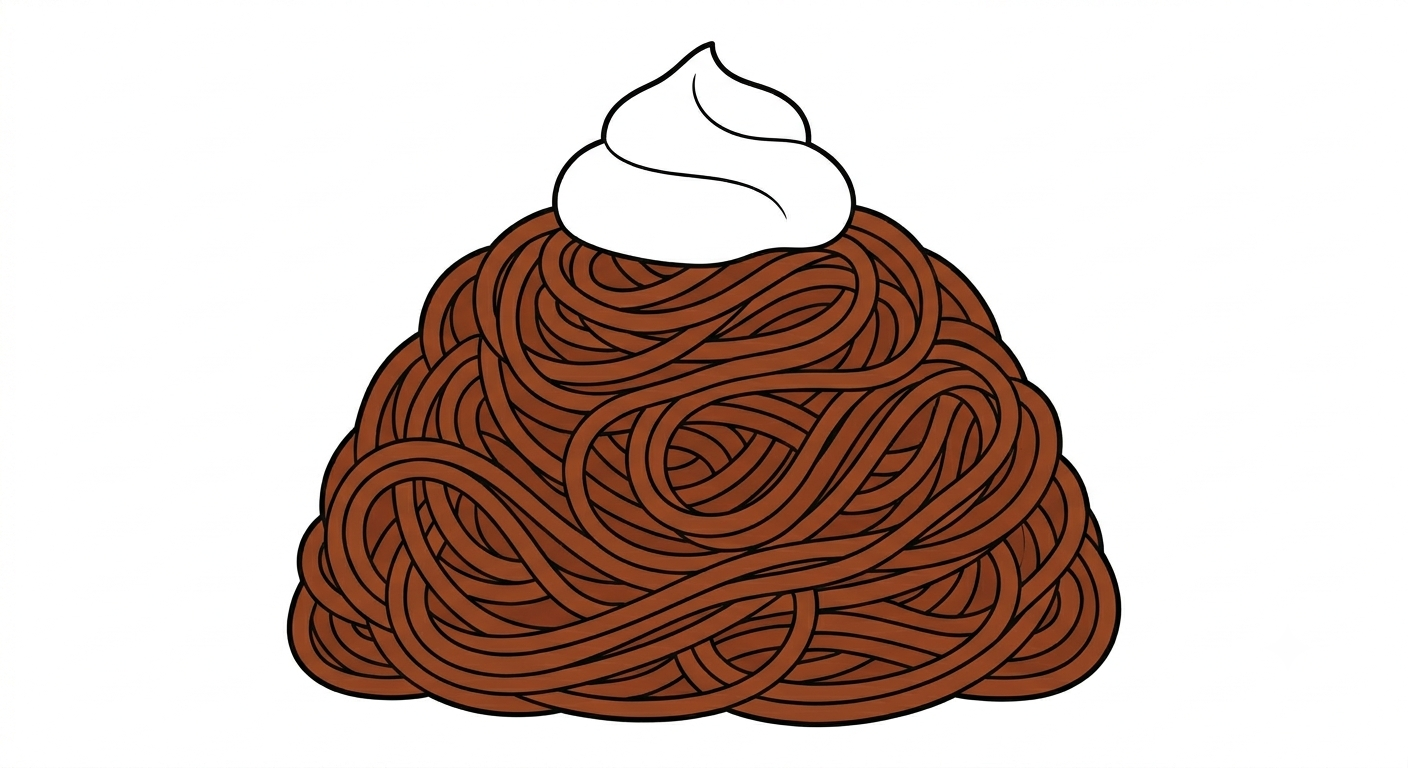
Monte Bianco is an Italian dessert built from a base of sweetened chestnut purée, mounded and shaped to resemble the snow-capped peak it is named after, and finished with a generous covering of whipped cream that completes the mountain illusion. Some versions add a layer of meringue at the base for texture and height; others incorporate rum or vanilla into the chestnut purée to deepen the flavor. It is a rustic construction by the standards of European patisserie — the mounding and shaping is done by hand or pushed through a food mill to create rough, worm-like strands of chestnut that pile loosely into a peak — and that rusticity is part of its character. It is a farmhouse dessert that has been elevated without being transformed.
Chestnuts have been a staple food in the mountainous regions of northern Italy for centuries, providing a reliable source of carbohydrate in areas where grain was difficult to grow. The chestnut forests of Piedmont, Valle d’Aosta, and the Italian Alps were not decorative — they were a food supply, and chestnut flour, dried chestnuts, and chestnut purée formed a significant part of the diet of mountain communities through the medieval period and well beyond. Monte Bianco emerged from that tradition of making something celebratory from an ingredient that was fundamentally practical, and it remains most closely associated with the autumn harvest season when fresh chestnuts are available.
The dessert is named for Mont Blanc — Monte Bianco in Italian — the highest peak in the Alps, which sits on the border between Italy and France and is claimed with equal enthusiasm by both countries. The dessert follows the same logic: Italy and France both have versions, both claim primacy, and both are right in the sense that the chestnut and cream combination developed on both sides of the same mountain range from the same agricultural tradition. The Italian version tends to be less formally constructed than its French counterpart — looser, more generous with the cream, less concerned with precision — which reflects a broader difference in how the two pastry cultures approach the same ingredients.
In Italian homes, Monte Bianco is an autumn and winter dessert, appearing at the end of Sunday lunches and holiday meals when chestnuts are at their peak. It is not a year-round fixture. Its seasonality is part of its appeal — it arrives when the weather turns cold and the chestnut harvest comes in, and it tastes like both of those things.
This content was created with the assistance of AI. Sources are currently being reviewed.