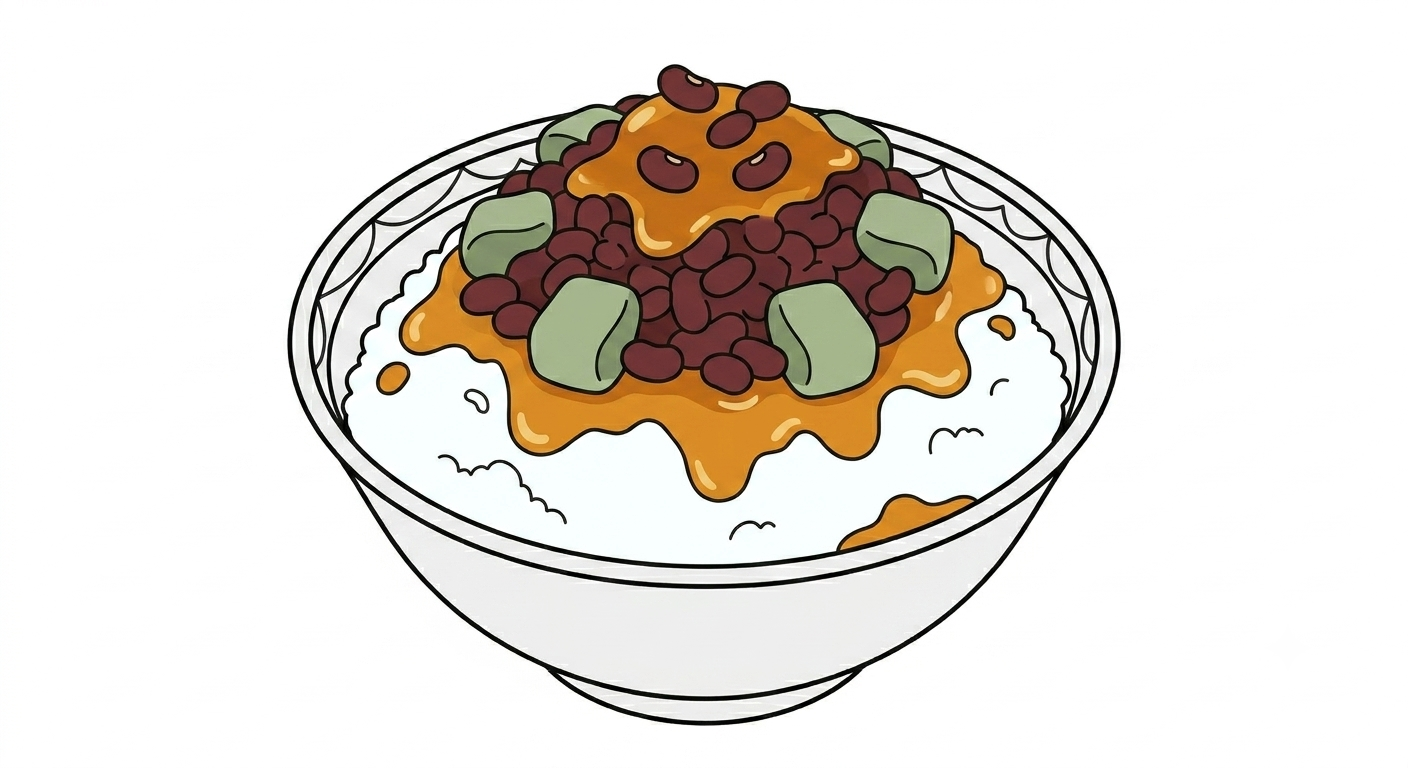
Patbingsu is shaved ice — but that description undersells it by a wide margin. The name breaks down simply: pat means red bean, bingsu means shaved ice. The classic version is a bowl of finely shaved ice topped with sweetened red bean paste, chewy rice cake pieces called tteok, sweetened condensed milk, and a dusting of misugaru, a roasted grain powder that adds a nutty, slightly bitter counterweight to all that sweetness. The proportions matter. The bowl is usually large enough to share and cold enough to make your teeth ache if you move too fast.
The origins of patbingsu trace back to Korea’s Joseon Dynasty, which ran from 1392 to 1897, when ice was a precious luxury reserved for royalty and the aristocratic elite. The government operated special ice storage warehouses called binggo, built along rivers to harvest and preserve natural ice through the winter months. These ice houses were so important that they were managed by dedicated government offices, and distributing ice was considered a royal privilege. The earliest form was simple — shaved ice, red bean paste, nothing more — but that simplicity was already a statement of access. Most people couldn’t have it.
By the late Joseon period, ice became more accessible thanks to the commercial production of ice blocks, which contributed to the growing popularity of bingsu. What had been a court food began moving into the streets, sold by vendors who could now source ice without a royal warehouse. The democratization of ice is one of the less examined but genuinely consequential shifts in food history, and patbingsu is a direct beneficiary of it.
The 20th century complicated the story. During the Japanese colonial period, the influence of kakigōri — Japanese shaved ice — introduced fruit syrups and shaped the form that bingsu took in the early 20th century. This is not a comfortable part of the history, but it is an accurate one. Korean culinary tradition absorbed and eventually transformed those influences into something distinctly its own, but the exchange happened under occupation, and that context belongs in the record. After the Korean War, American soldiers introduced condensed milk, which made the dish richer and heavier, adding another layer of foreign influence to a dessert that had started in a Joseon ice house.
The patbingsu recognizable today — sweet red beans, rice cakes, condensed milk, roasted bean powder over finely shaved ice — took its current shape in the 1980s, when Korean café culture began treating bingsu as something worth refining rather than simply selling. The texture shifted too: modern versions increasingly use milk frozen and shaved rather than water ice, producing something closer to fresh snow than crushed ice, light enough that it melts on contact and requires a different kind of eating.
Contemporary bingsu has expanded into territory that would be unrecognizable to the Joseon court — matcha, mango, cheesecake, coffee, seasonal fruit piled high for social media — but patbingsu, the red bean original, remains the standard against which everything else is measured. It is the version that carries the history. Eaten in summer, shared from a single bowl, it is less a dessert than a seasonal institution — the Korean equivalent of a food that marks the year and tells you exactly what time it is.
This content was created with the assistance of AI. Sources are currently being reviewed.