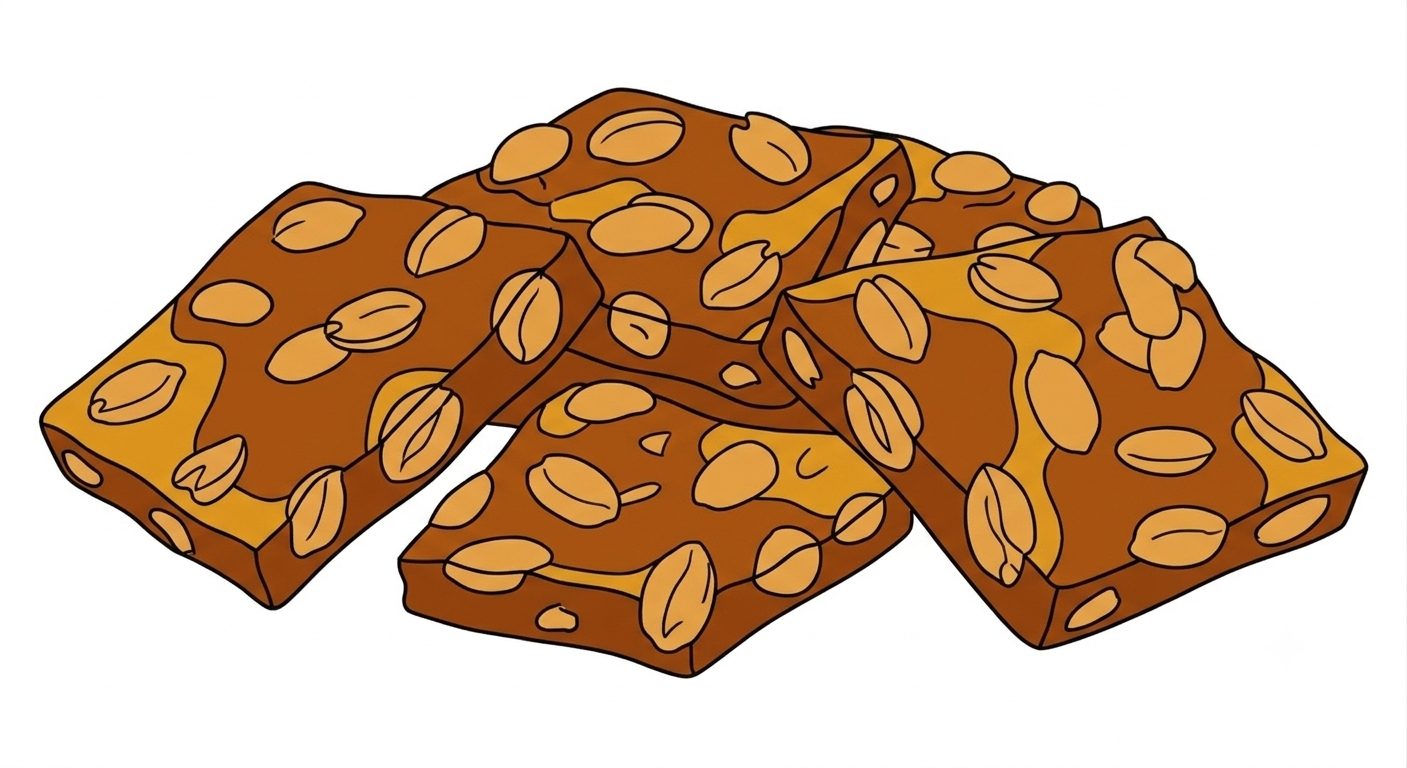
Pe de moleque means street kids foot or rascals foot in Portuguese. One explanation for the name is that the candys irregular surface resembles the cobblestone pavement of colonial Brazilian streets. However, a more popular folk legend suggests the name comes from street vendors who, when children tried to steal the candy, would tell them to run away by shouting pe, moleque—foot it, kid. It is a peanut confection made from roasted peanuts and rapadura, the dark, unrefined cane sugar block that provides the deep molasses flavor central to traditional Brazilian cooking.
The roots are Afro-Brazilian. Peanuts were integrated into the Brazilian pantry through the Atlantic trade, and enslaved Africans developed peanut-based sweets that became staples of street commerce and popular festivals. Pe de moleque is a direct survival of this tradition, especially prominent during the Festa Junina celebrations in June. These festivals celebrate rural caipira culture, where rapadura and peanuts represent the humble, dependable ingredients of the Brazilian interior.
There are two distinct versions of the candy. In the Southeast, it is typically a hard brittle—crunchy, glassy, and snappable. In the Northeast, specifically in Pernambuco, the name often refers to bolo de pe de moleque, a soft, dark, and dense cake-like confection made with manioc flour and coffee. Both versions are canonical festival foods, sold alongside other corn and peanut-based treats like canjica and pamonha.
Pe de moleque is a food of the street and the festival stall rather than the high-end bakery. Its presence at a celebration connects the event to Brazils colonial history and its rural roots. Whether as a brittle or a cake, it remains one of the most recognizable and culturally significant sweets in the country, valued for its complex sugar profile and its deep ties to Brazilian folk identity.
This content was created with the assistance of AI. Sources are currently being reviewed.