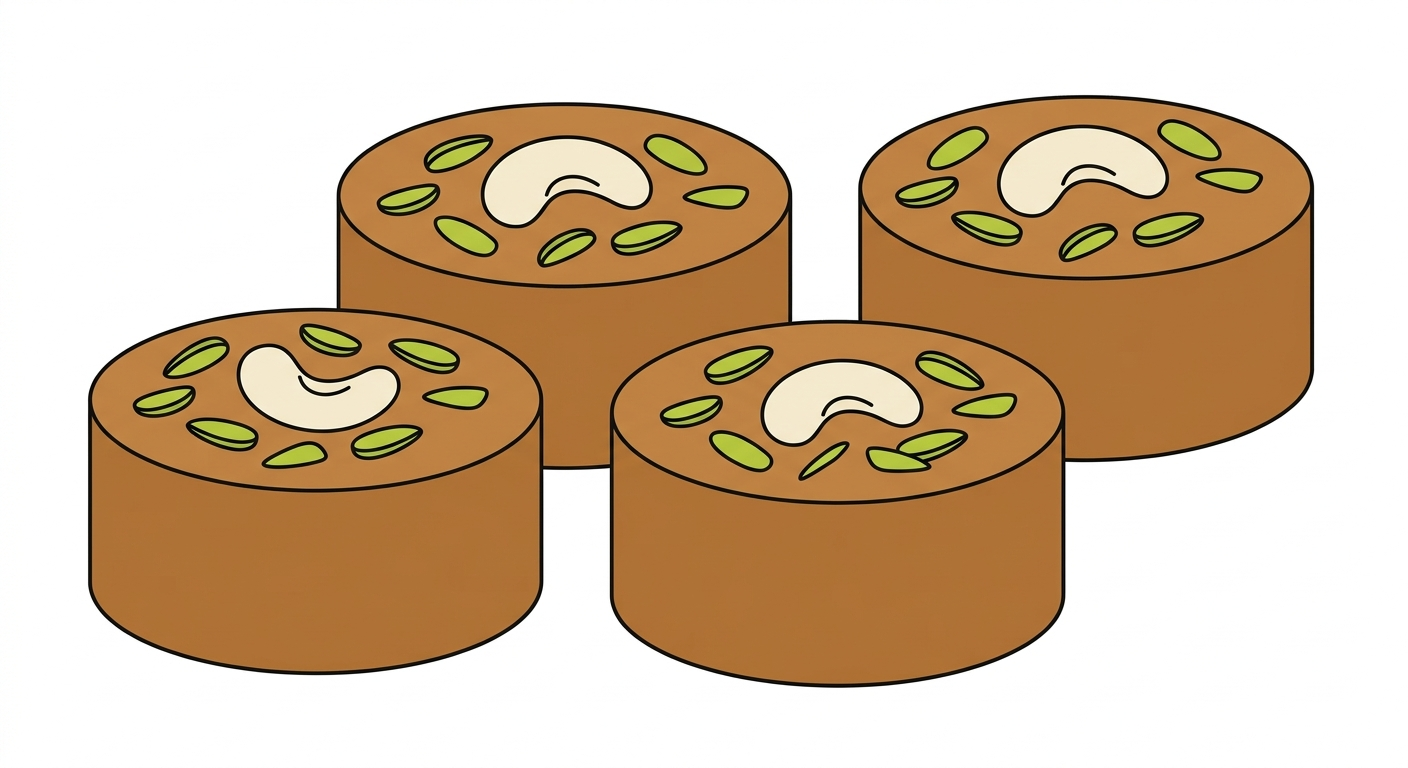
Pinni is a round, palm-sized sweet made from whole wheat flour slow-roasted in generous amounts of desi ghee until deeply browned and nutty, then combined with jaggery or sugar, cardamom, dry ginger, and a mixture of nuts — almonds, cashews, pistachios — along with optional additions like edible gum, flaxseed, or khoya. The mixture is shaped by hand into dense balls while still warm. The roasting is the critical step: the flour needs low, patient heat to develop color and flavor without burning, and the quality of the ghee shapes the final taste more than any other single ingredient. Pinni is not a delicate sweet. It is compact, rich, and calorie-dense by design.
Pinni originates in the Punjab region, shared between present-day India and Pakistan, where the winters are cold enough to make high-fat, high-energy foods a practical necessity rather than an indulgence. The ingredients — wheat, ghee, jaggery, dried nuts — were all locally available and could be produced or stored on the farm. Pinni was made in large batches at the start of winter and kept in airtight containers for weeks, eaten throughout the cold months as a daily sustaining food as much as a sweet. It appears in accounts of Punjabi soldiers during World War I, cited as provisions sent from home. The edible gum component — gond, a tree resin puffed in hot ghee until it blooms into a crunchy, airy mass — is a specifically nutritional addition, traditionally included in foods prepared for new mothers, the elderly, and anyone in recovery.
Pinni also functions as a general Punjabi term for any sweet shaped into a round ball, which creates some overlap with similar preparations across North India. The wheat flour version — atte ki pinni — is the most recognized, but urad dal pinni, besan pinni, and alsi pinni made with flaxseed are all distinct variations with their own regional identities. The word itself has no fixed single recipe attached to it the way a more codified dessert might; families have their own proportions, and the ratio of ghee is always higher than first-time makers expect. It is also a gift food — pinni jars travel between households and across borders, carried by relatives and packed into luggage as a portable piece of home.
This content was created with the assistance of AI. Sources are currently being reviewed.