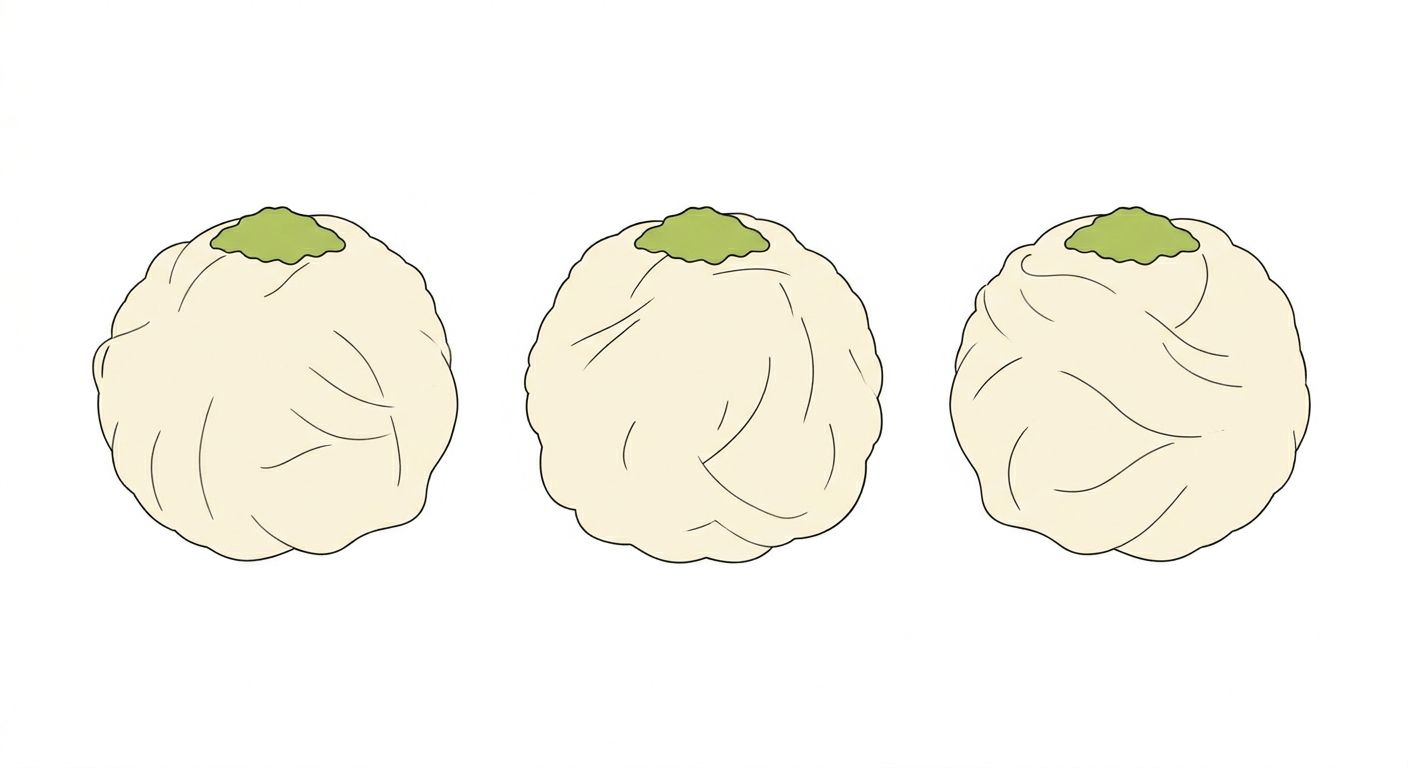
Pişmaniye is made from three ingredients: sugar cooked to a precise temperature into a firm, malleable mass, flour roasted slowly in butter until nutty and golden, and the labor required to combine them. The sugar mass is formed into a large ring, placed on a surface dusted with the roasted flour mixture, then stretched, folded into a figure eight, and stretched again — repeatedly, by two or more confectioners working in coordination — until the sugar pulls into thousands of fine, hair-thin threads coated in the buttered flour. The result is a cloud of pale, fibrous strands that compresses into a block or ball and dissolves on contact with the tongue, leaving behind a faint nuttiness from the flour and the sweetness of the sugar. It is sometimes garnished with ground pistachio. The physical process of making it — the pulling, folding, and stretching — requires strength and precision, and the number of folds determines the fineness of the final threads.
The origin traces to Persia, where a similar pulled sugar confection made with flour and fat was called peşmek, meaning wool — a reference to its fibrous, fleece-like texture. The Persian form traveled westward through the Ottoman culinary sphere and took root in Izmit, the capital of the Kocaeli province near Istanbul, where it became the city’s defining product. Most accounts credit an Armenian confectioner who settled in Izmit and began producing it commercially; the name of Hacı Agop Dolmajian appears in several Turkish sources as the figure who introduced the modern Izmit form. Whether pişmaniye arrived as a finished tradition or was developed locally from Persian precedents is not settled. What is documented is that by the Ottoman period it had entered palace kitchens — it is still called saray helvası, palace helva, in some Izmit contexts — and that Izmit has been the center of production ever since.
The name carries two competing etymologies. The straightforward one traces it to the Persian peşmek through phonetic drift. The more entertaining one is a love story: a confectioner made the sweet for a woman he called şişmaniye — my plump one — and when the relationship failed, he renamed it pişmaniye, meaning regret. The word pişman does mean regret in Turkish, and an old saying attached to the sweet runs: he who has not tasted it regrets it once; he who has tasted it regrets it a thousand times. The second regret is for the calories, or for how difficult it is to stop eating.
This content was created with the assistance of AI. Sources are currently being reviewed.