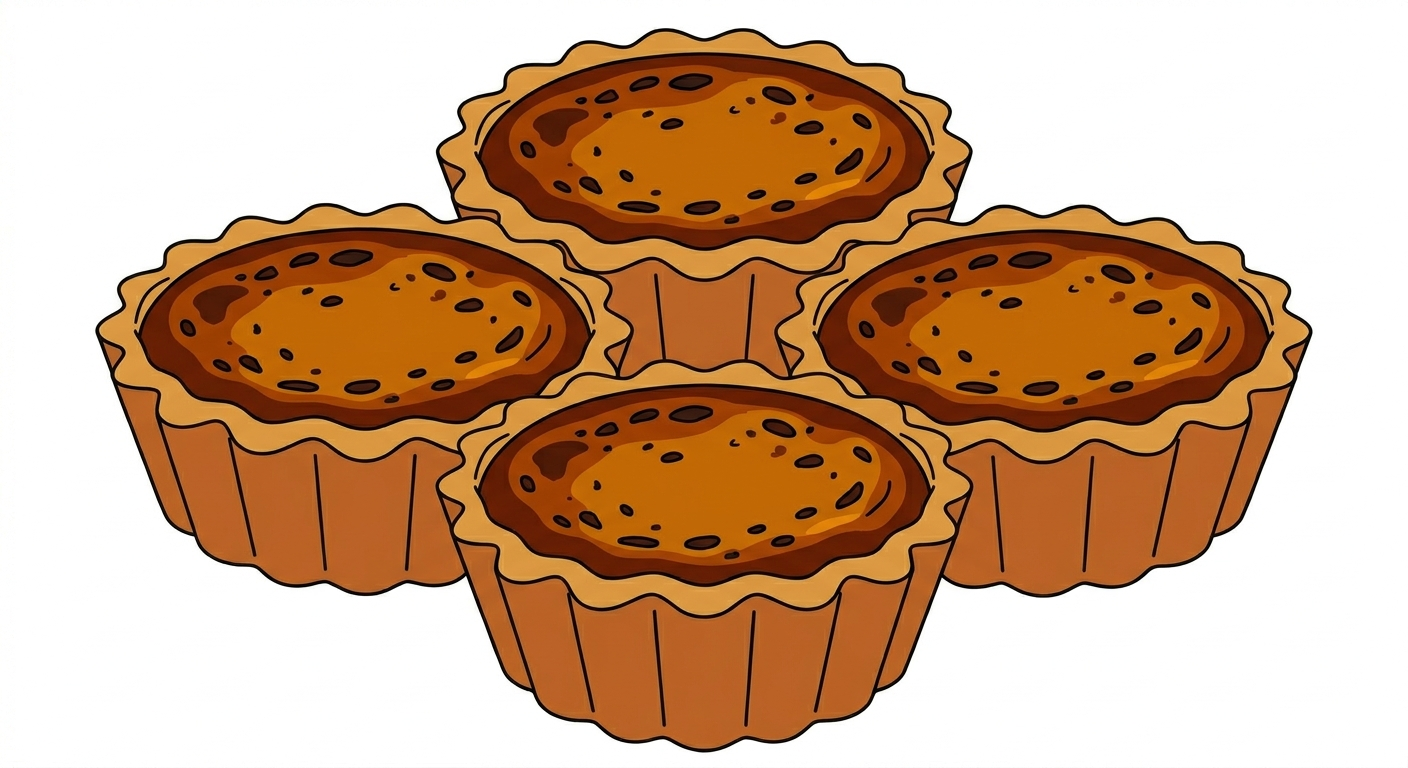
A queijada is a small tart — a thin, slightly crisp pastry shell filled with a mixture of fresh cheese, eggs, sugar, and cinnamon, baked until the filling sets into something dense and faintly grainy, sweet and faintly savory at once, with the clean dairy flavor of the cheese running through everything. It is palm-sized. It is eaten in a few bites. It is, by the assessment of most people who have eaten both, a serious rival to the pastel de nata for the title of Portugal’s most essential pastry — a competition the nata wins on visibility and the queijada wins on argument.
The history starts in the 13th century, in Sintra, the hill town northwest of Lisbon that sits in a microclimate so distinct from the surrounding region that it produces its own cheese. The requeijão of Sintra — a fresh, ricotta-like cow’s milk cheese made from the whey of local dairy — is the defining ingredient of the queijada, and it is native to the area. You can make a version of a queijada anywhere. You cannot make a queijada de Sintra anywhere else, because the cheese that gives it its specific flavor, its slightly granular texture, and its particular quality of being simultaneously sweet and clean does not exist outside that landscape. The pastry is local in the most literal sense — it could only have been invented here, with these ingredients, from this soil.
For much of the medieval period, queijadas were considered valuable enough to function as currency. Locals used them as payment for fees, rents, and royal obligations — a fact that reads as charming until you consider what it actually means: that these small cheese pastries were accepted by landlords and crown officials as a legitimate form of exchange. The Portuguese novelist Eça de Queiroz, writing in Os Maias in the 19th century, references a mother advising her son to bring queijadas when visiting Sintra to cover the month’s rent. The detail is casual in the text, which suggests the practice was understood and unremarkable. A dessert that pays your rent is not a luxury item. It is a staple of the economy.
Commercialization came in 1756, when a bakery that would become known as Queijadas da Sapa began selling them formally. Sapa still stands in Sintra and is still considered the standard against which all others are measured — the shop that has been making queijadas from the original recipe, by hand, for nearly three hundred years. The recipe is a closely guarded secret. The core ingredients — requeijão, sugar, eggs, cinnamon, flour — are known. The exact proportions that produce the specific texture and depth of flavor that distinguishes Sapa’s queijadas from everything else are not.
The queijada’s relative obscurity outside Portugal is one of the more puzzling facts in European pastry culture. It is not difficult to eat, not challenging in flavor, not exotic in presentation. It is simply very, very good — better than a pastry this modest has any right to be — and it has been consistently, quietly excellent for seven hundred years while the pastel de nata accumulated all the international attention. Travelers who find it tend to become devoted to it. Sintra without a queijada from Sapa is technically possible. It is not recommended.
This content was created with the assistance of AI. Sources are currently being reviewed.