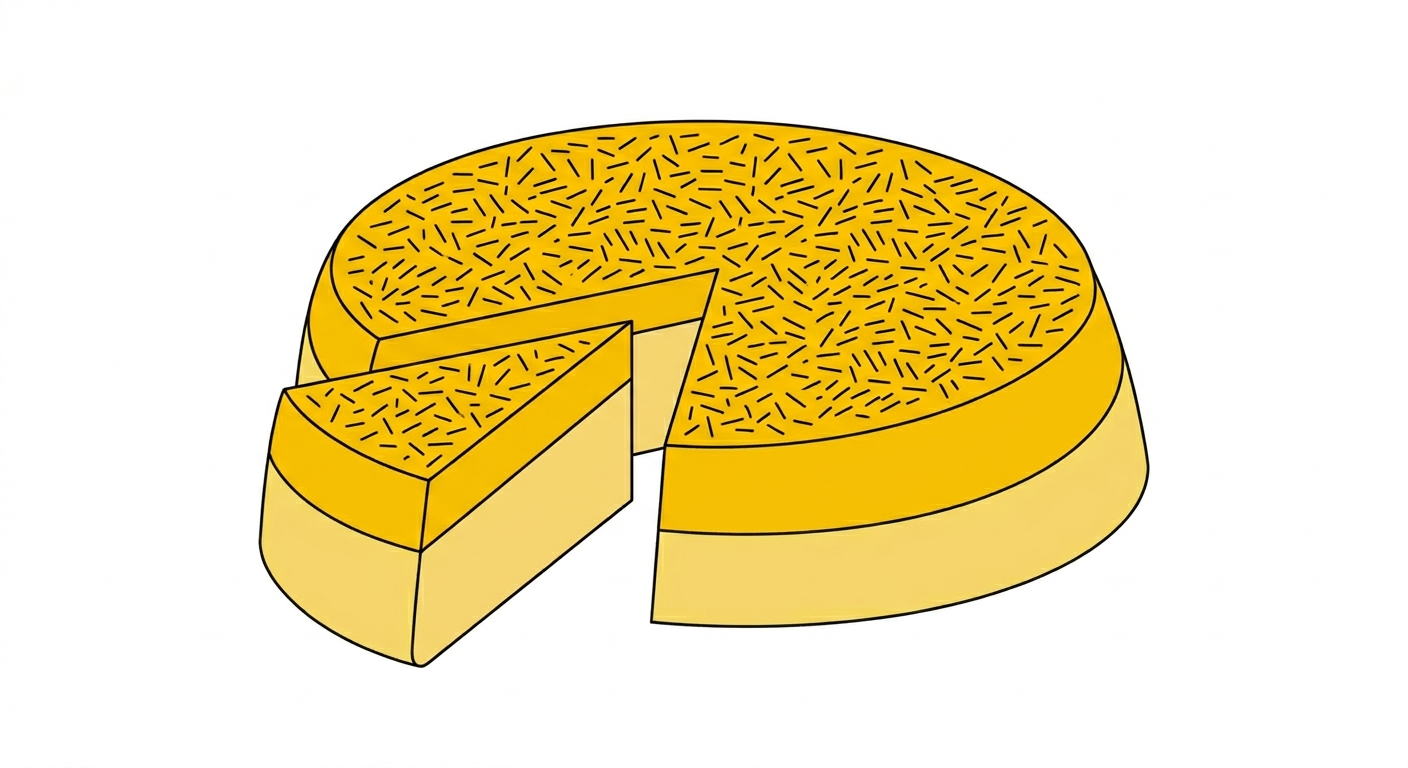
Quindim is a vibrant, glossy yellow custard that stands as a primary example of Brazilian culinary syncretism. It is made from a high concentration of egg yolks, sugar, and shredded coconut, baked until the top is firm and the interior is silky and rich. The dessert is defined by its striking two-tone appearance: a brilliant, translucent yellow cap of custard sits atop a dense, white coconut base. This separation happens naturally during the baking process as the heavier coconut settles to the bottom of the mold.
The desserts history is a direct result of the meeting of Portuguese and African cultures in colonial Brazil. Because almonds were an expensive import, enslaved African cooks in the northeast of Brazil substituted them with the abundant local coconut. This substitution did more than change the flavor; it fundamentally altered the texture and established quindim as a masterpiece of the Afro-Brazilian kitchen.
The name quindim derives from the Bantu word dikinda, which in the Kikongo language refers to the playful gestures, charms, or humors of young women. This etymology reflects the desserts identity as something pleasing, delicate, and intentionally attractive. The technical execution is demanding; to achieve the mirror-like shine and avoid any egg-like scent, the yolks must be strained through a sieve—never beaten—to remove the membranes. The custard is then baked in small, heavily greased molds in a banho-maria, or water bath, which ensures the gentle heat necessary for a smooth set.
Quindim is a showpiece of the Brazilian bakery window and a staple of festive gatherings. Whether served as a single large ring known as a quindao or as individual bite-sized portions, it is valued for its intense sweetness and its unique cultural lineage. Quindim remains one of the clearest examples of how colonial-era ingredient substitution produced a distinctly Brazilian result.
This content was created with the assistance of AI. Sources are currently being reviewed.