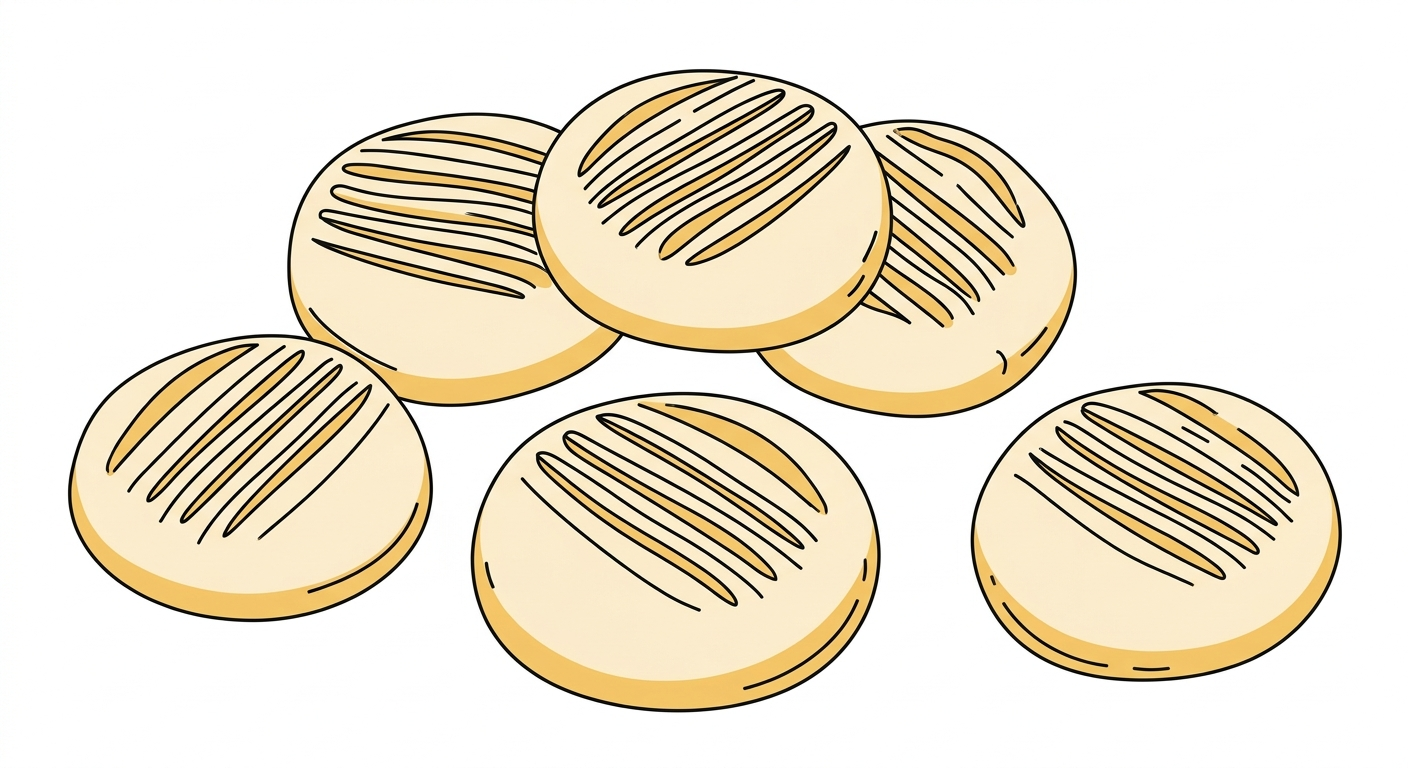
Sequilhos take their name from the Portuguese word for dry—seco—which describes their texture accurately. They are crumbly, light cornstarch cookies that dissolve quickly, earning them the nickname derrete na boca, or melts in the mouth. Made from cornstarch, butter, condensed milk, eggs, and vanilla, the dough is stiff enough to roll into balls by hand, which are then flattened slightly with a fork before baking—the fork tines leave a crosshatch impression that is the cookies only decoration.
The cornstarch base connects sequilhos to a broader family of Latin American shortbread-style cookies that developed from Spanish and Portuguese colonial baking. The Spanish polvoron uses a similar crumbly structure, as does the Argentine cornstarch alfajor. In Brazil, the brand name Maizena became so synonymous with cornstarch that these cookies are often referred to by the brand name itself. Because they rely on starch rather than wheat flour, sequilhos are a naturally gluten-free staple in the Brazilian pantry.
Condensed milk is a specifically Brazilian adaptation that reflects the mid-twentieth century ubiquity of the ingredient in home kitchens following Nestles distribution campaigns. In some regional variations, particularly in the North and Northeast, coconut milk is substituted for condensed milk to provide a different flavor profile while maintaining the same delicate texture.
Sequilhos are home cookies—simple, fast, and made without specialized equipment. They are not a bakery prestige item and not a celebration food. They are the cookie a Brazilian grandmother makes on a Tuesday, stored in a tin, and eaten with coffee. Their place in Brazilian food culture is defined by ordinariness and accessibility, which remains their primary significance.
This content was created with the assistance of AI. Sources are currently being reviewed.