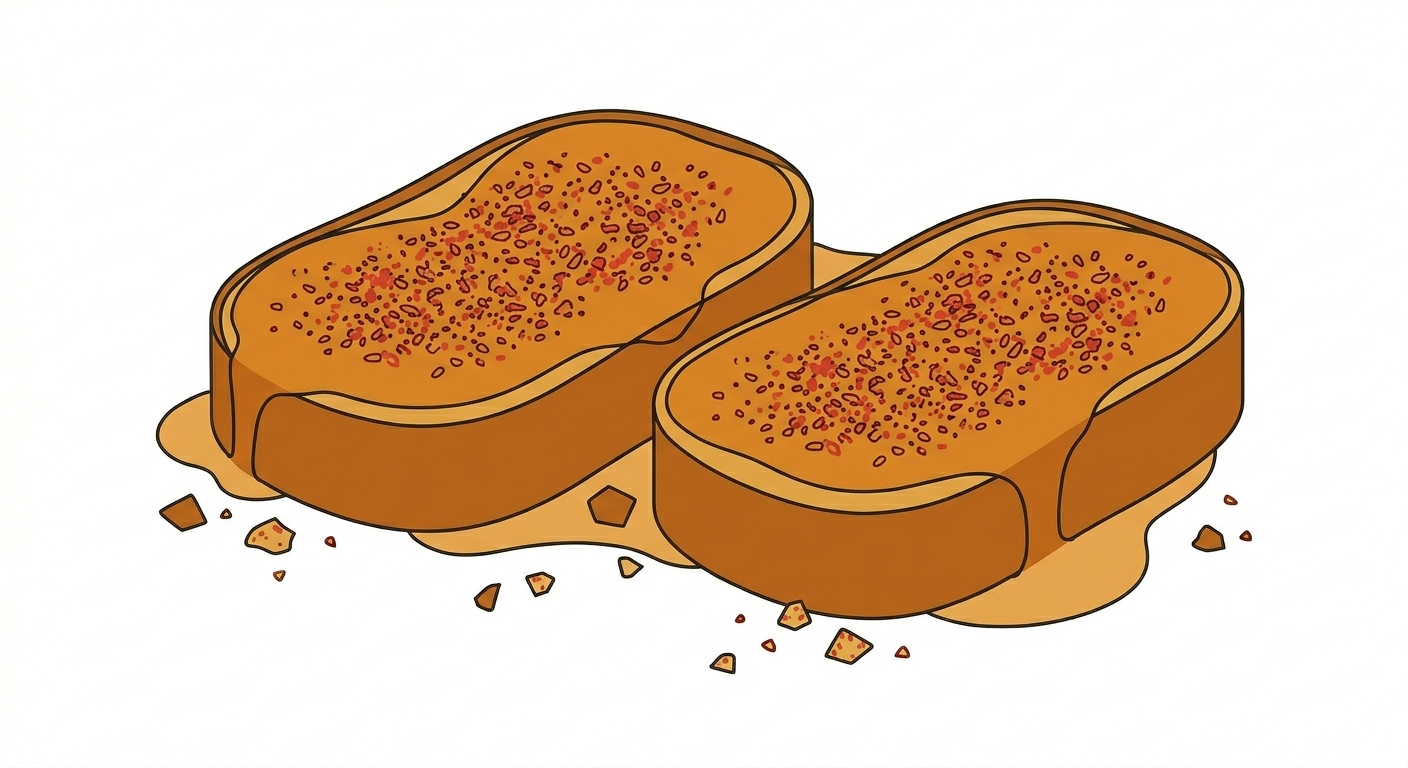
Torrijas are a Spanish preparation of bread soaked in sweetened milk or wine, dipped in egg, fried in olive oil, and finished with honey, cinnamon sugar, or both. They are the Spanish cousin of French toast — the technique is essentially the same — but the context, the flavoring, and the cultural weight are entirely different. Where French toast is a breakfast convenience, torrijas are a Lenten ritual, eaten throughout Holy Week in Spain with a seriousness of purpose that elevates them well beyond their humble ingredients. A well-made torrija is crisp on the outside, custardy within, fragrant with cinnamon, and just sweet enough to feel like an indulgence without tipping into excess.
The earliest Spanish recipes for torrijas appear in the 15th century, making them one of the older documented preparations in the Iberian culinary record. The Lenten association is practical in origin: the days before Easter called for abstinence from meat, and torrijas offered a way to use bread that was going stale — an important consideration in an era when nothing was wasted — while still producing something that felt festive and satisfying. The use of wine rather than milk in some regional versions also connects to the religious context, though the milk version has become dominant in most of modern Spain.
In Madrid, torrijas are taken seriously enough that bakeries and pastry shops produce them in large quantities throughout Semana Santa — Holy Week — and the quality varies enough that Madrileños have strong opinions about whose are best. The wine version, soaked in sweet wine and finished with honey, tends to be the preference in some parts of Castile; the milk version, heavier and more custardy, dominates in others. Some contemporary chefs have produced elevated versions with brioche, flavored creams, and caramelized finishes, which are technically accomplished and somewhat beside the point.
Torrijas share a lineage with similar preparations across the Mediterranean and beyond — pain perdu in France, fattoush-adjacent fried bread dishes in the Arab world, and milk-soaked bread preparations that appear in Roman culinary texts. The technique of rescuing stale bread with liquid and fat is ancient and nearly universal; Spain simply built a holiday around it.
This content was created with the assistance of AI. Sources are currently being reviewed.