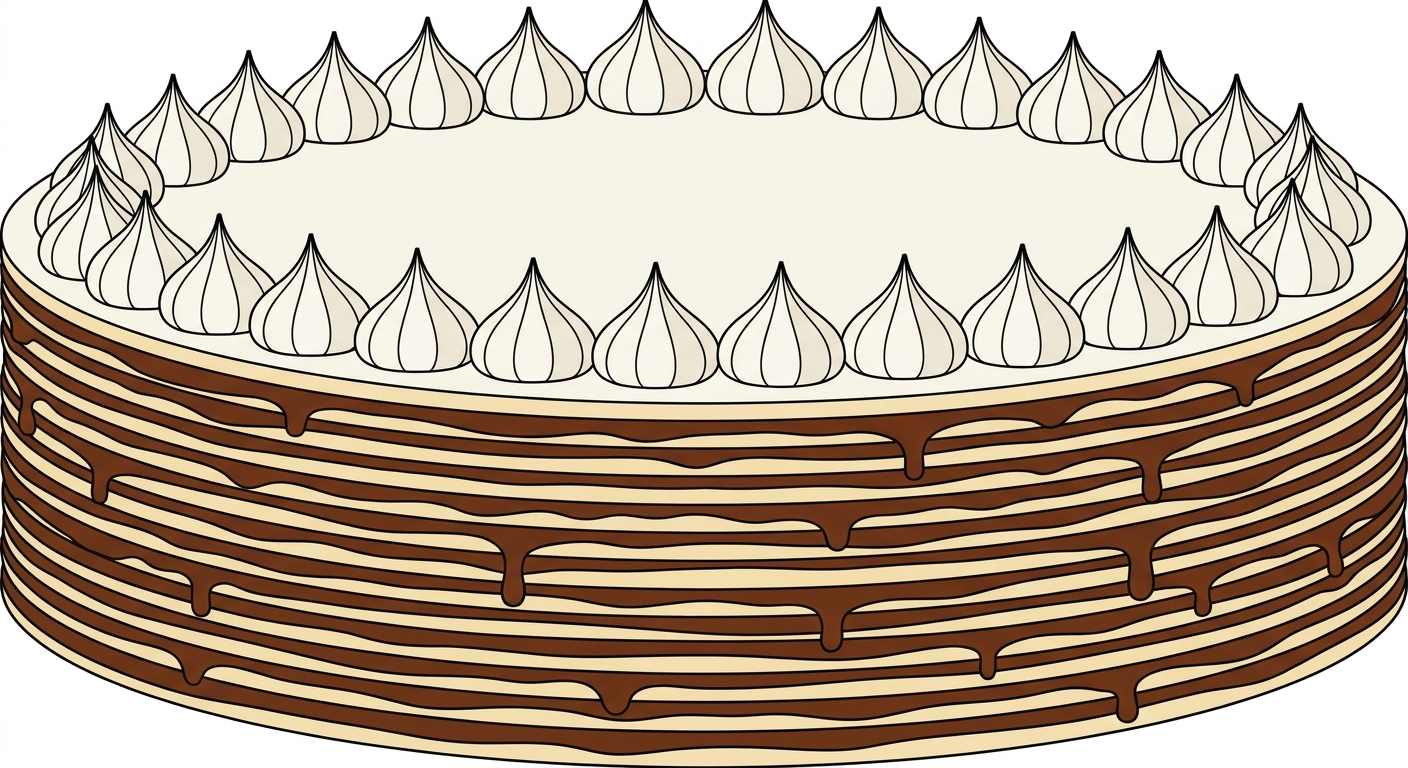
Torta rogel is a stacked Argentine cake made from between eight and twelve layers of unleavened pastry—rolled paper-thin and baked until crisp. The dough is a specific yolk-based mixture known as masa de yemas, often containing a splash of alcohol or vinegar to ensure the pastry remains short and brittle. The thinness of the layers is the structural foundation of the entire cake, and the rolling requires significant patience to produce the correct ratio of pastry to filling in the finished slice.
The filling is exclusively dulce de leche repostero—a thicker, more stable version of the traditional caramel spread that prevents the layers from sliding. The weight of the layers compresses the filling during assembly, and the moisture begins to soften the pastry on contact. Torta rogel is widely considered best the day after it is made; this resting period allows the dulce de leche to penetrate the layers, creating a texture that is firm yet yielding. Because of its construction and flavor profile, it is often nicknamed the alfajor gigante, or giant alfajor.
The top is finished with a thick layer of Italian meringue—made by streaming hot sugar syrup into whipped egg whites—producing a glossy, stable peak that can be torched without collapsing. The torched, browned surface is the visual signature of the cake. While the format has parallels in European mille-feuille traditions, the rogel is a distinctly Argentine creation that evolved through local immigrant baking.
The modern version was popularized and trademarked in the 1960s by Charo Balbiani de Rogel, who turned a family recipe into a national icon. It is a prestige celebration cake, made for birthdays and weddings, where its impressive height and visible strata make it one of the most visually distinctive desserts in the Argentine repertoire.
This content was created with the assistance of AI. Sources are currently being reviewed.