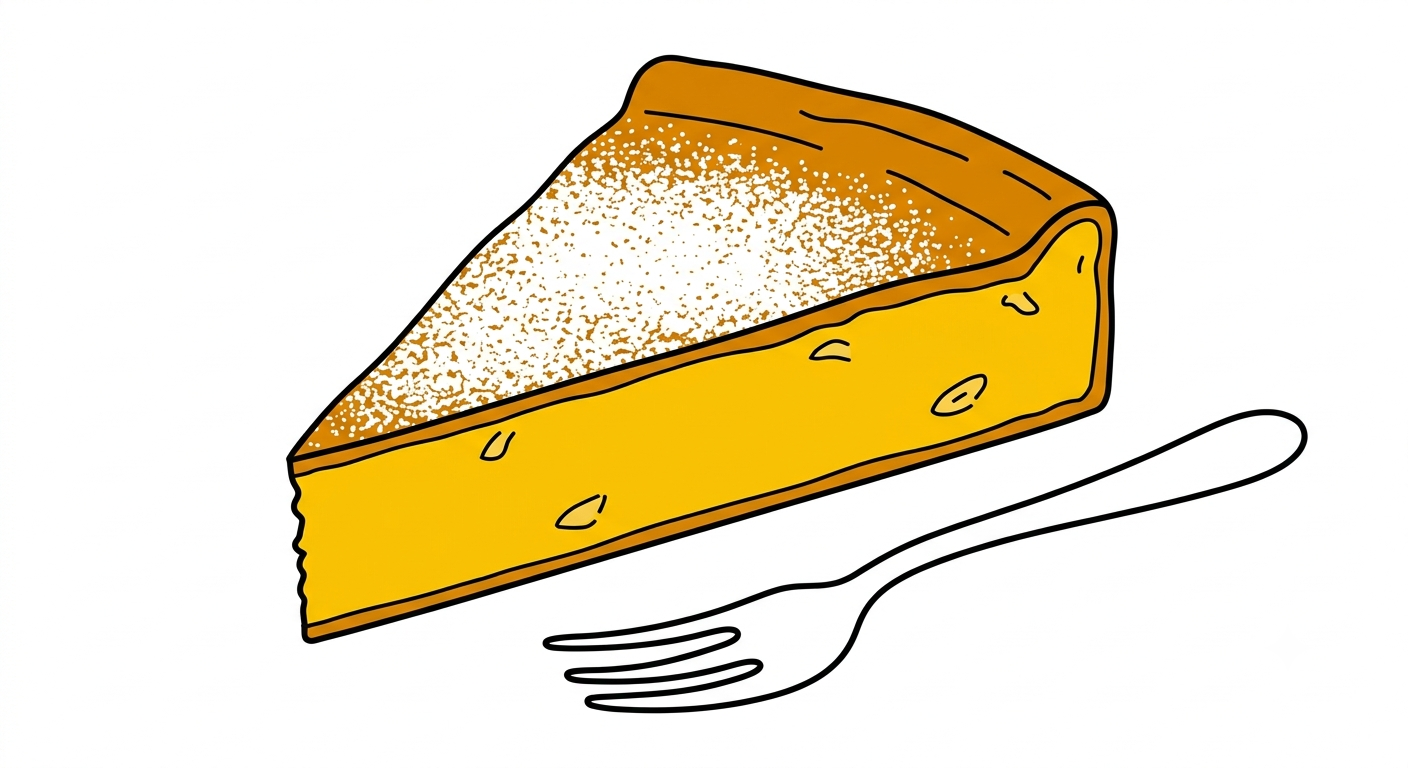
Toucinho do céu is a dense almond cake — flourless or nearly so — built from ground almonds, egg yolks, sugar, and fat, baked until the top turns a deep amber and the interior sets into something between a custard and a cake. It is extraordinarily rich. A small slice is the correct portion, and most people ignore that. The name means “bacon from heaven,” which requires some explanation: toucinho is the Portuguese word for lard or bacon fat, and the original recipe used pork fat to give the cake its particular silkiness. Modern versions generally substitute butter. The heaven part requires no explanation.
The origins are conventual. Toucinho do céu belongs to the tradition of doçaria conventual — Portugal’s convent sweets — a category of dessert that is both deeply specific to Portuguese culinary history and one of the most ingenious examples of institutional resource management in the history of food. The logic worked like this: egg whites were in constant demand in Portugal for clarifying wine, using them as a fining agent that swept impurities from the liquid before it was bottled. Winemakers had abundant egg yolks they couldn’t use. Local convents received those surplus yolks, combined them with sugar and almonds donated by benefactors, and turned them into sweets that were sold to support the community and fund charitable works. The nuns were not simply baking — they were running a small economy built on other people’s byproducts.
Toucinho do céu is credited to the Convent of Santa Mónica, with the recipe traced to the 16th century, though regional variations and competing origin stories complicate the picture. The northern city of Guimarães claims it most consistently, and a version of the recipe survived the closure of the convent of Santa Clara there in 1910, carried out by three displaced nuns who continued baking to support themselves. The recipe eventually passed to a niece, Palmira, who opened a pastry shop — Casa Costinhas — that kept the tradition alive into the modern era. That is not a minor detail. The survival of a 16th-century convent recipe into the present day depended entirely on those three women having nowhere else to go and a skill worth selling.
The almond, which is the defining ingredient, is not native to Portugal. It arrived on the Iberian Peninsula through Arab agricultural and culinary tradition during the Moorish presence, and without it neither toucinho do céu nor most of Portuguese conventual pastry exists in its current form. The Moorish influence here is structural — it shaped the pantry that the nuns were working from, centuries before they turned those almonds into something this good.
There are two primary variations in circulation: the almond version, which is the most widely known, and a version made with gila — a sweet pumpkin preserve — associated with the convent at Murça. Both share the same egg-yolk-and-sugar foundation. Both are correct. The almond version is the one that travels best and the one most likely to appear in a Portuguese pastry shop window, set in a paper case, dusted with powdered sugar, and looking considerably more modest than it tastes.
This content was created with the assistance of AI. Sources are currently being reviewed.