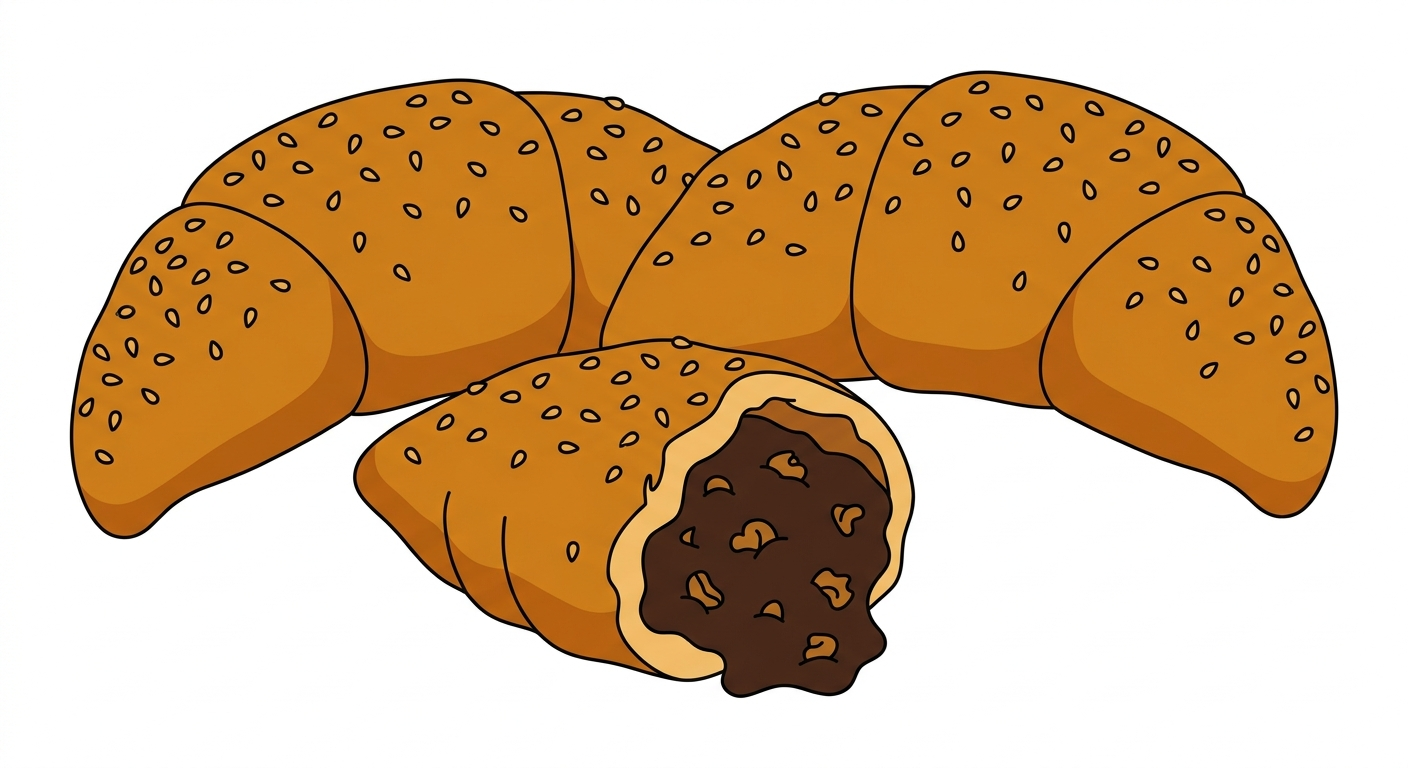
Travados are Sephardi Jewish pastries made from a tender, oil-based dough shaped into half-moons and filled with a mixture of ground walnuts or almonds — sometimes both — combined with sugar, cinnamon, and occasionally raisins or currants for a faint chewiness against the ground nuts. They are baked until golden and then dipped while still warm into a light sugar syrup, emerging glossy and fragrant, or in some Greek versions skipped the syrup entirely and dusted instead with powdered sugar while still hot. Either way they are small, dense, and deeply satisfying — the pastry itself mild and slightly crumbly, the filling the dominant flavor, the sweetness arriving last through the syrup or sugar coating.
Every Sephardi cookbook and probably every Sephardi cook has a version of these nut-filled pastries. They appear across the former Ottoman Sephardi world with slight but meaningful regional differences — the Turks prefer walnuts for the filling while the Greeks lean toward almonds, and the syrup versus powdered sugar distinction similarly tracks geography rather than preference. In Rhodes, travados were traditionally served at Purim, while in Turkey they were on the table at Rosh Hashanah to celebrate the sweet new year. The holiday associations are not interchangeable — they reflect the specific liturgical calendars and traditions of distinct Sephardi communities that developed independently within the broader Ottoman world while sharing a common Iberian ancestry. My Jewish Learning + 2
The half-moon shape connects travados to a family of filled pastries that runs through Sephardi cooking and into the broader Mediterranean and Middle Eastern pastry tradition — the bureka, the empanada, the sambusak — all of which use a similar logic of dough wrapped around filling and sealed at the edge. The Sephardi contribution is the specific combination of ground nuts, warm spice, and honey or syrup finish that places travados within the sweet rather than savory end of that tradition, and the kosher requirement that the dough be made with oil rather than butter, keeping the pastry pareve and suitable for any table.
The nut filling varies enough between families and communities that no single recipe can be called definitive. Some versions add orange juice to the filling for brightness; others incorporate cloves alongside the cinnamon; a few use a combination of pine nuts with the walnuts. What remains constant is the half-moon shape, the ground nut filling, and the honey or syrup finish — the three elements that make a travado recognizable across five centuries of diaspora cooking.
This content was created with the assistance of AI. Sources are currently being reviewed.