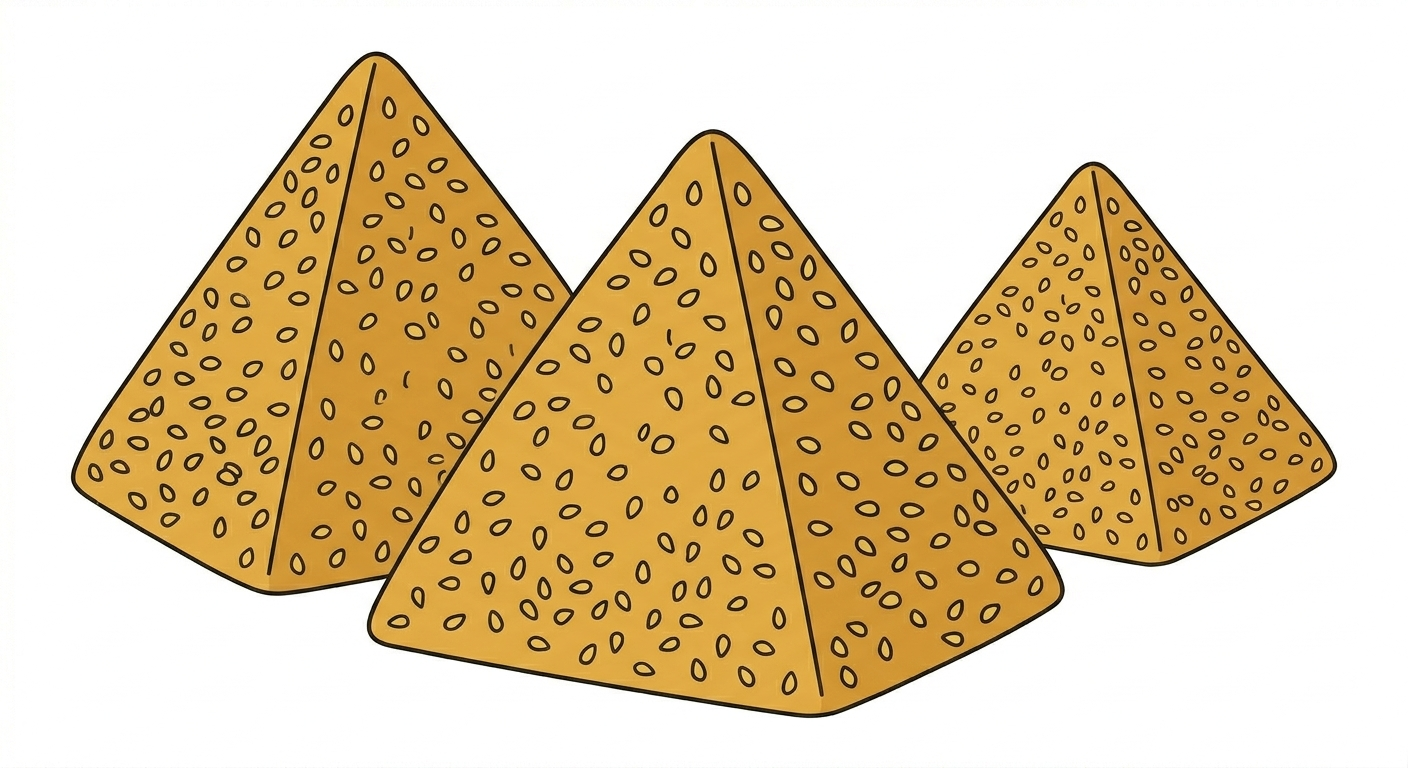
Mustachudos are Sephardi Jewish cookies made from ground walnuts, sugar, egg whites, and grape must — the thick, dark syrup produced from reduced grape juice — mixed into a dense dough, shaped into small rounds or ovals, and baked until just set. They are chewy at the center, slightly firm at the edges, and intensely flavored — the walnuts providing richness and texture, the grape must adding a deep, jammy sweetness with a faint tartness underneath that keeps the cookie from being one-dimensional. They are not delicate cookies. They are substantial, concentrated, and built to last — the kind of thing that keeps well in a tin for weeks and improves for at least the first few days as the flavors settle and deepen.
The name derives from mosto — the Spanish and Italian word for grape must — which places the cookie’s origins squarely in the Iberian culinary tradition the Sephardi community carried out of Spain in 1492. Grape must as a sweetener predates refined sugar in Mediterranean cooking by centuries; it appears in ancient Roman recipes, in Byzantine cooking, and across the breadth of the pre-sugar Mediterranean world as a way of adding sweetness and body to both savory and sweet preparations. The mustachudo preserves that ancient sweetening tradition in a cookie that has outlasted the civilization that produced it.
Mustachudos are most closely associated with Rosh Hashanah — the Jewish New Year — when grapes and their products carry symbolic resonance connected to the harvest and to the wine used in Kiddush, the blessing over wine that marks Shabbat and holidays. The grape must ties the cookie to that symbolism in a way that feels less like decoration and more like intention. They also appear at Sukkot, the harvest festival that follows Rosh Hashanah, and at Purim, where the tradition of sending plates of sweets — mishloach manot — puts a premium on cookies that travel well and keep their quality over several days.
The walnut and grape must combination appears in similar forms across the Sephardi diaspora and in the broader eastern Mediterranean — Greek must cookies called moustokouloura share the same foundational logic, pointing to a common ancestor in the Byzantine and pre-Byzantine cooking of the region. Whether the Sephardi mustachudo descended from that Greek tradition, developed in parallel from the same ancient Roman source, or arrived in the Ottoman world through Iberian inheritance and then converged with local preparations is the kind of question that food history rarely answers cleanly.
This content was created with the assistance of AI. Sources are currently being reviewed.