Australian dessert culture operates on two distinct tracks that have rarely intersected — the British colonial baking tradition that became mainstream Australian food culture, and the food traditions of Aboriginal and Torres Strait Islander peoples whose culinary knowledge of the continent spans at least 65,000 years. Contemporary Australian food culture has been further transformed by post-World War II immigration, particularly from Italy, Greece, Lebanon, Vietnam, and China, producing one of the most diverse urban food landscapes in the world in cities like Melbourne and Sydney.
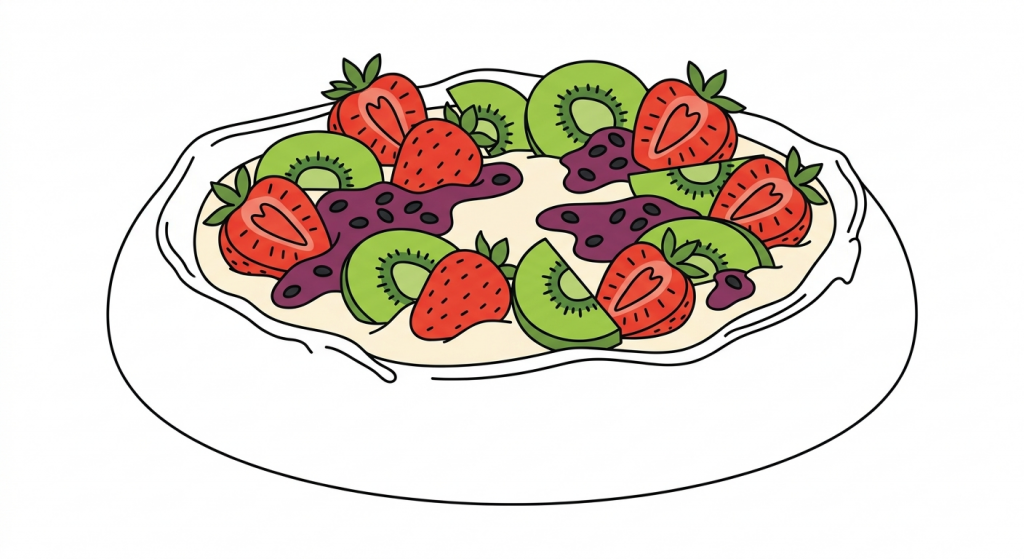
Lamingtons are squares of sponge cake coated in chocolate icing and rolled in desiccated coconut — considered Australia’s national cake and sold at school fundraisers, bakeries, and supermarkets across the country. Anzac biscuits are oat and golden syrup cookies with a documented history tied to World War I, when they were sent to Australian and New Zealand soldiers — they have a legal protection that restricts their name to the traditional recipe. Pavlova — a meringue base topped with whipped cream and fresh fruit — is claimed by both Australia and New Zealand, with food historians in both countries producing competing evidence for the origin. The Australian version typically uses passionfruit as a topping.
Bush tucker — the collective term for Indigenous Australian food ingredients — includes wattleseed, quandong, Davidson’s plum, finger lime, lemon myrtle, and Kakadu plum, among hundreds of other plant and animal foods specific to different regions of the continent. These ingredients were the basis of Aboriginal food culture for millennia and are now being incorporated into contemporary Australian cooking and commercial food production. Wattleseed has a coffee and hazelnut flavor and is used in ice cream, cakes, and biscuits. Kakadu plum has the highest recorded Vitamin C content of any fruit in the world.
Aboriginal and Torres Strait Islander peoples represent over 250 distinct language groups with different food traditions across the continent — there is no single Indigenous Australian food culture. The incorporation of bush tucker ingredients into mainstream Australian cooking has raised ongoing questions about attribution, intellectual property, and commercial benefit, with some Indigenous communities and advocates arguing that commercialization should involve direct community partnership and compensation.
This content was created with the assistance of AI. Sources are currently being reviewed.