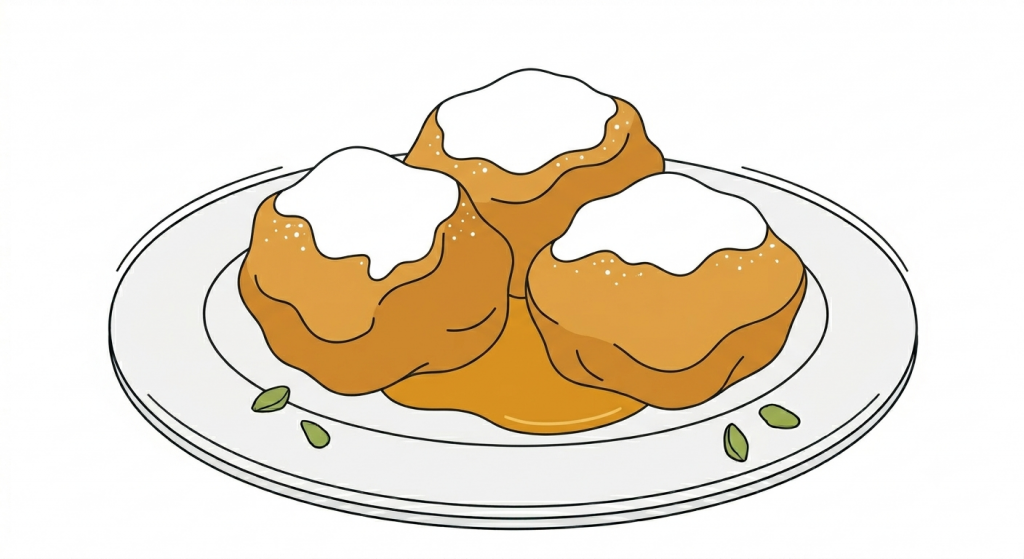
Albania was under Ottoman rule for approximately five centuries, from 1431 to 1912, and that period is the primary architecture of Albanian confectionery. Baklava, kadaif, and syrup-soaked semolina sweets are not borrowings here — they are embedded traditions with regional Albanian variations that developed over generations. Tambëloriz, a baked rice pudding with a caramelized top, is one of the most common home desserts in the country, made for guests and family meals alike.
What distinguishes Albanian sweets from their broader Balkan and Ottoman counterparts is the influence of a largely rural, mountain-based economy. Yogurt, walnuts, honey, and eggs are the primary building blocks — dairy-forward, nut-heavy, and reliant on what mountain households could produce and store. Sweetness is dense and functional rather than decorative.
Ballokume is the most regionally distinct Albanian pastry — a crumbly cornmeal and butter cookie from Elbasan, traditionally made for the spring festival of Dita e Verës on March 14th. It has no close parallel elsewhere in the Balkans and is one of the clearest examples of a specifically Albanian confectionery tradition outside the Ottoman framework.
Albania also has trilece — a three-milk soaked sponge cake that arrived via Latin American influence in the post-communist period and is now ubiquitous in Albanian cafés and bakeries, particularly in Tirana. Its rapid adoption reflects how quickly Albanian food culture modernized after the 1990s.
This content was created with the assistance of AI. Sources are currently being reviewed.