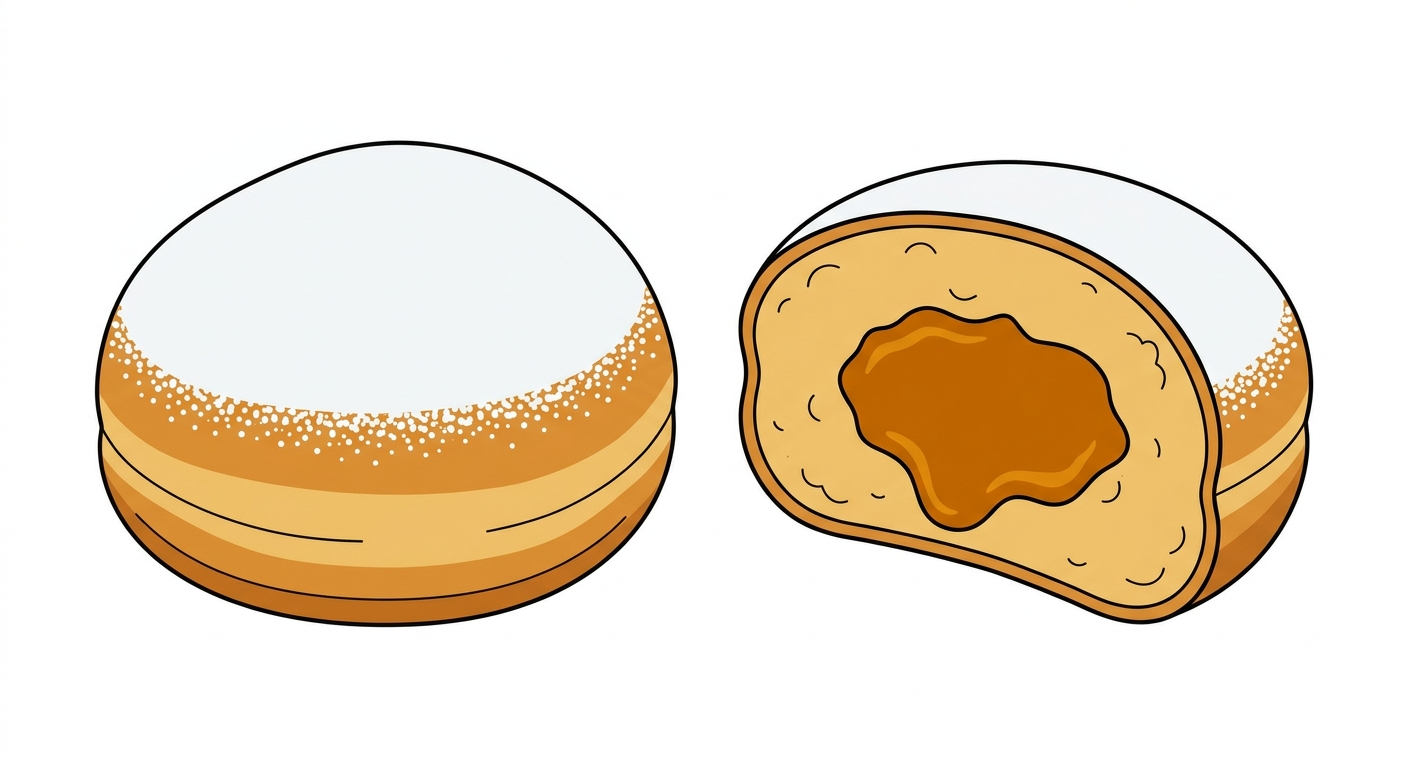
Bola de fraile means “friar’s ball” in Spanish — the name references the round shape and connects the pastry to the European monastic baking tradition where fried dough sweets were made in convents and monasteries and sold to fund religious communities. The same tradition produced the Spanish buñuelo, the Polish pączki, and dozens of other fried dough sweets across Catholic Europe that arrived in South America through Spanish colonial settlement.
The dough is yeasted and enriched — flour, eggs, butter, sugar, and yeast, left to rise before frying. The balls are fried in oil until golden, drained, rolled in sugar while still hot, and filled by injection with dulce de leche or pastry cream. The dulce de leche version is the most common in Uruguay and Argentina. The pastry cream version is also standard in many bakeries. Some versions are sold plain, dusted only with powdered sugar, without filling.
Bola de fraile is a bakery item rather than a home bake — the frying and filling require equipment and practice that makes it more practical to purchase than to make. It appears in Uruguayan and Argentine panaderías every day, eaten for desayuno — breakfast — with coffee or mate, or during merienda, the afternoon snack eaten between lunch and dinner that functions as a light meal in both countries.
The structural relationship to the German Berliner doughnut — yeasted, fried, filled with jam or cream — is direct. German and Central European immigration to the Río de la Plata region in the nineteenth and twentieth centuries reinforced the fried filled dough tradition already present through Spanish colonial baking, producing a bakery culture where multiple European fried dough traditions converged and became standardized into the everyday panadería repertoire.
This content was created with the assistance of AI. Sources are currently being reviewed.