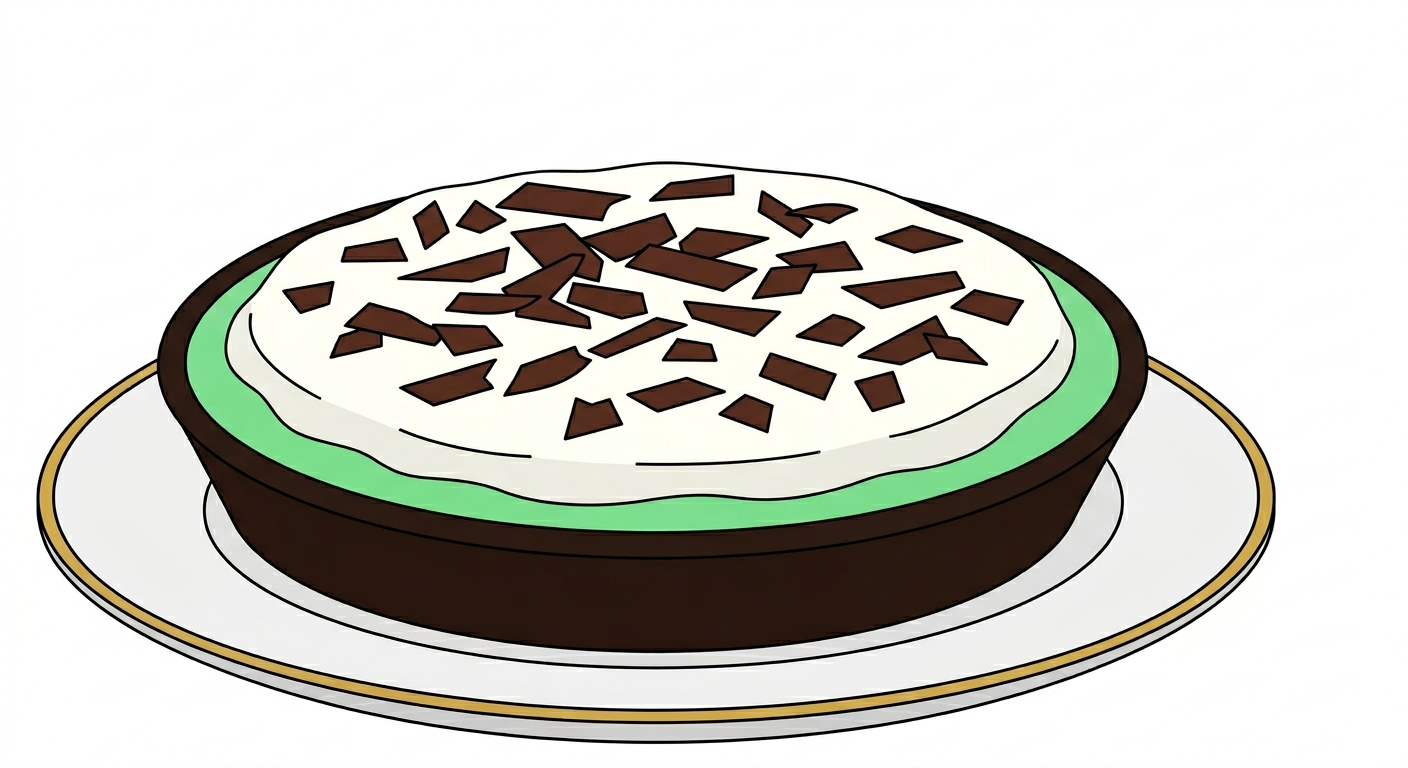
Grasshopper pie is a no-bake icebox pie with a chocolate cookie crust and a filling made from crème de menthe, crème de cacao, and whipped cream or marshmallow cream set with gelatin. The filling is pale green from the mint liqueur, cold, and light in texture. It is served directly from the refrigerator or freezer and sliced cleanly. The name comes from the Grasshopper cocktail, which uses the same core ingredients and gives the pie its flavor profile and color.
The crust is almost universally made from crushed chocolate sandwich cookies — Oreos are standard — pressed into a pie dish and chilled rather than baked. The contrast between the dark chocolate crust and the pale green filling is part of the dessert’s visual identity. Some versions fold in cream cheese for additional structure; others rely entirely on gelatin and whipped cream. Marshmallow-based versions, which melt marshmallows into the filling as a stabilizer in place of gelatin, were common in mid-century American home cooking and remain in circulation.
The Grasshopper cocktail was created at Tujague’s, a restaurant in New Orleans, in the early twentieth century. The pie version developed later, most likely in the 1950s, as icebox pies and no-bake refrigerator desserts became a significant category in American home cooking. The liqueur-based filling translated naturally into pie format, and the dessert spread through the same channels as other mid-century American pies — community cookbooks, women’s magazine recipe columns, and brand recipe pamphlets. It became particularly associated with the South and Midwest, where it appears frequently in church and community cookbook traditions.
French influence is flagged here for the liqueurs at the center of the recipe. Crème de menthe and crème de cacao are both French cordial traditions, and their presence in American cocktail and dessert culture came through French and French Creole culinary channels, particularly pronounced in New Orleans, where the source cocktail originated. The pie itself is an American construction, but its defining flavoring agents are French imports that would not have been standard pantry items without that specific culinary lineage.
Grasshopper pie faded from mainstream American food culture in the 1980s and 1990s alongside other liqueur-forward mid-century desserts, though it has retained a loyal following in the regions where it was most popular. It appears on the menus of a small number of New Orleans restaurants as a regional artifact, and it continues to circulate in home baking contexts where mid-century American recipes remain in active use.
This content was created with the assistance of AI. Sources are currently being reviewed.