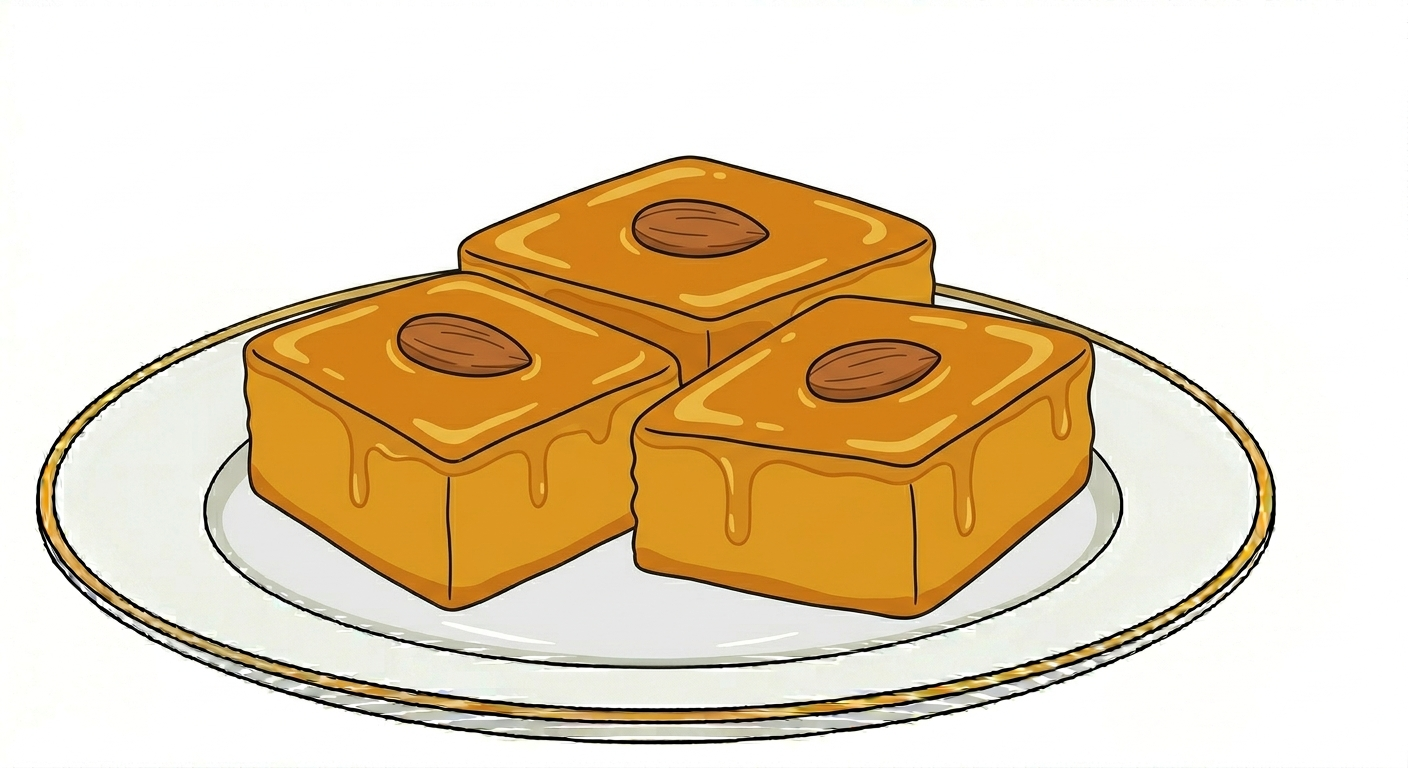
Tishpishti is a Sephardi Jewish semolina and walnut cake soaked in a sugar syrup flavored with lemon and sometimes orange blossom water or rose water. It is made without flour and without dairy, which places it squarely within the requirements of a kosher kitchen where meat and milk are not mixed — a practical consideration that shaped an enormous amount of Sephardi baking. The cake itself is dense and slightly grainy from the semolina, rich with ground walnuts, and fragrant with citrus; the syrup soaks in as it cools, sweetening the crumb throughout and giving the surface a faint gloss. It is cut into diamond or square shapes before baking, a presentation common across the syrup-soaked cake tradition of the eastern Mediterranean.
The name is Turkish in origin, and the cake is most closely associated with the Sephardi communities of Turkey, Greece, and the broader Ottoman world — the communities that formed after the expulsion of Jews from Spain and Portugal in 1492 and 1497. The Ottoman Empire welcomed the expelled Sephardim, and Jewish communities settled across Istanbul, Thessaloniki, Izmir, and beyond, carrying their Iberian culinary traditions with them while absorbing and adapting the flavors of their new surroundings. Tishpishti reflects both sides of that exchange — the walnut and semolina base connects to the broader Ottoman and Middle Eastern tradition of syrup-soaked sweets, while the specific spicing and preparation carry the fingerprints of a community maintaining its own identity within a new landscape.
The syrup-soaked semolina cake appears in various forms across the region — basbousa in Arabic-speaking communities, revani in Turkish baking, shamali in Levantine tradition — and the relationships between these preparations are close enough that tracing a single point of origin is neither possible nor particularly useful. What distinguishes tishpishti as a Sephardic preparation is the combination of walnuts, the kosher dairy-free requirement that shapes the fat used, and the specific context of the Sephardic table where it appears — Shabbat, holidays, and celebrations where something sweet signals that the occasion matters.
Tishpishti is particularly associated with Rosh Hashanah, the Jewish New Year, when sweet foods carry symbolic weight and honey-soaked or syrup-drenched preparations appear on tables across Jewish communities worldwide. The walnuts connect to another layer of tradition — in some Sephardic communities walnuts are associated with the High Holidays, though the specific symbolism varies by family and region.
This content was created with the assistance of AI. Sources are currently being reviewed.