Tunisian desserts reflect the country’s Amazigh Indigenous base, Arab and Andalusian influence, Ottoman presence from the 16th century, and French Protectorate rule from 1881 to 1956. Tunisia sits at the geographic center of the Mediterranean and historically functioned as a trading point between North Africa, the Levant, and Europe, and its dessert tradition reflects ingredients and techniques from all of these directions.
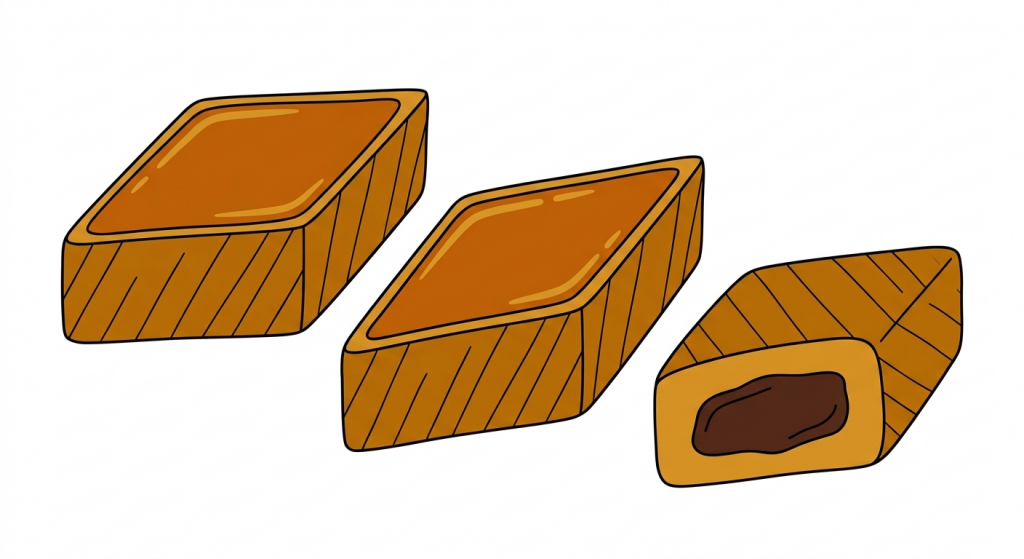
Makroud are semolina diamonds filled with date paste and fried or baked, then soaked in honey — the most widely recognized Tunisian pastry, particularly associated with the city of Kairouan where it has been produced commercially for generations and holds a protected geographical indication. Samsa are triangular phyllo pastries filled with ground almonds, sesame, and orange blossom water, sealed with egg and fried — delicate and labor-intensive, associated with weddings and Eid celebrations. Zgougou is a paste made from Aleppo pine seeds — zgougou seeds — cooked into a dense cream with milk and sugar, eaten specifically during Mouloud, the Prophet Muhammad’s birthday celebration, and representing one of the most specifically Tunisian preparations in the North African repertoire.
Bambalouni are large fried dough rings dusted with powdered sugar or dipped in honey, sold by street vendors throughout Tunisia and particularly associated with coastal cities. They are eaten warm as a street snack and represent the everyday sweet culture distinct from the more elaborate pastry tradition. Assidat zgougou and assidat bouza — thick puddings made from zgougou paste or barley — are ceremonial preparations served at specific celebrations.
The Tunisian Jewish community, which had a significant presence particularly in Tunis and on the island of Djerba for over two millennia, contributed distinct sweet traditions to Tunisian food culture before the majority emigrated to Israel and France following independence. Tunisian Jewish pastries including brik and various almond-based preparations overlapped significantly with Muslim Tunisian baking while maintaining distinct occasion contexts. The community’s departure substantially altered the food landscape of cities where they had been concentrated.
This content was created with the assistance of AI. Sources are currently being reviewed.