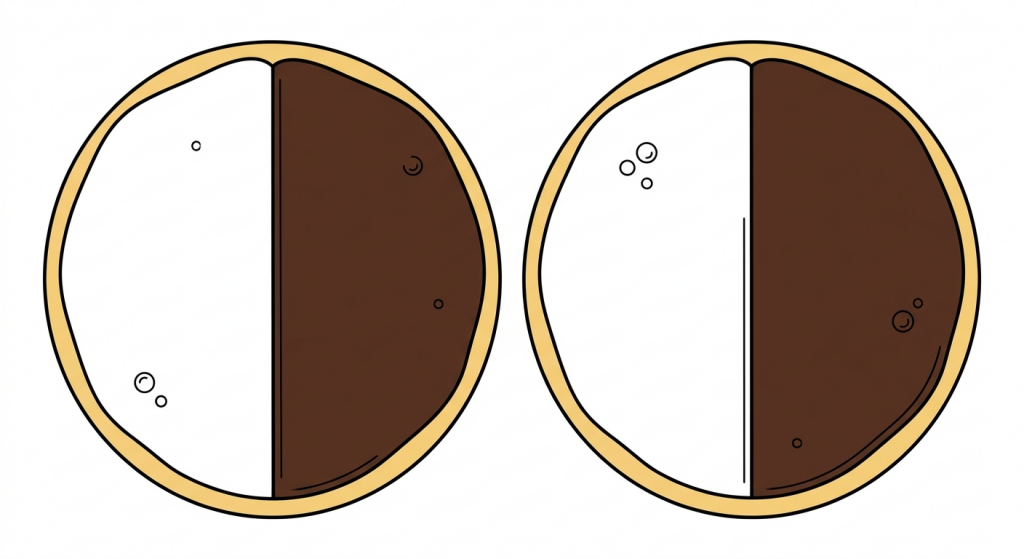
The American East Coast has been a landing point for centuries of immigration, and its dessert culture reflects every wave. Jewish communities brought rugelach, babka, and black-and-white cookies that became New York institutions. Italian immigrants established the cannoli, sfogliatelle, and pasticciotti that still anchor neighborhoods in Brooklyn, South Philadelphia, and Boston’s North End. Caribbean communities brought coconut buns, sweet bread, and rum cake that took root in neighborhoods from the Bronx to Hartford. Eastern European bakers added their own pastry traditions to a landscape that was already dense with flour and sugar.
The Great Migration brought Southern Black baking northward — sweet potato pie, tea cakes, and layer cakes made their way into Harlem, Bedford-Stuyvesant, and North Philadelphia kitchens, where they became part of the urban East Coast food identity alongside the immigrant traditions already there. The interaction between these communities shaped what East Coast baking actually is — not a single tradition but a constant, productive collision of them.
Coastal towns add a different register — blueberry pies, saltwater taffy, whoopie pies, and cider donuts tied to orchard and seaside culture from Maine to Maryland. The range is genuinely wide. A cannoli from Arthur Avenue, a slice of sweet potato pie from a Harlem bakery, and a bag of saltwater taffy from the Jersey Shore are all East Coast desserts. They just tell different parts of the same story.
This content was created with the assistance of AI. Sources are currently being reviewed.