Filipino desserts reflect 333 years of Spanish colonial rule followed by nearly five decades of American colonial administration — two consecutive colonial periods that layered European and American ingredients and techniques onto an existing Austronesian food culture. The result is one of the most distinctly hybrid dessert traditions in Southeast Asia, where Spanish egg-yolk custards, American-influenced ice cream culture, and Indigenous rice and coconut preparations coexist in the same food landscape.
Kakanin is the collective term for traditional Filipino rice and coconut-based sweets — a broad category that includes bibingka, puto, kutsinta, sapin-sapin, and biko, among dozens of others. These preparations are made from glutinous rice, rice flour, or cassava combined with coconut milk and various sweeteners, and are associated with specific occasions and regions. Bibingka is a rice cake baked in a clay pot lined with banana leaves, topped with salted egg and cheese, eaten specifically during the Christmas season alongside puto bumbong. The Christmas food tradition in the Philippines — centered on Simbang Gabi, the nine-day series of dawn masses before Christmas — is one of the most food-specific religious observances in the Catholic world.
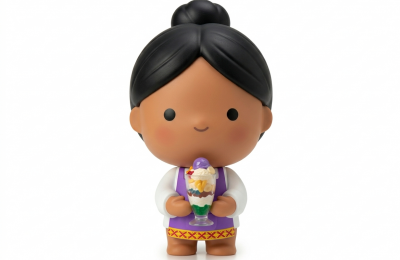
Leche flan is the Filipino version of the Spanish flan — denser and sweeter than the original due to the use of more egg yolks and condensed milk, reflecting both Spanish colonial influence and the American introduction of canned condensed milk. Halo-halo is a layered shaved ice dessert with beans, jellies, fruit, ube halaya, leche flan, and ice cream — one of the most visually complex everyday desserts in the world. Ube — purple yam — is a specifically Filipino ingredient that has gained international recognition through its distinctive purple color and vanilla-like flavor, now used in everything from traditional kakanin to contemporary ice cream and pastries.
The Philippines comprises over 7,600 islands with more than 180 distinct languages and significant regional food variation. Mindanao in the south has a significant Muslim population whose food traditions follow halal requirements and include preparations distinct from the predominantly Catholic food culture of Luzon and the Visayas.
This content was created with the assistance of AI. Sources are currently being reviewed.